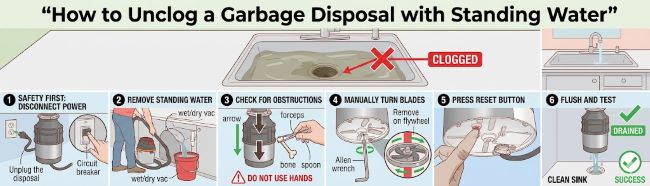
Your sink has water sitting in it. You flip the switch on your garbage disposal, and nothing happens. Or it runs but the water won’t drain. That standing water is a problem. It sits there, gradually smelling worse. You need to fix it, but you have no idea how to unclog a garbage disposal with standing water without making things worse.
A clogged garbage disposal with standing water is one of the most common kitchen problems homeowners face. The good news is that you can fix most of these clogs yourself without calling a plumber. Understanding what causes the problem and what methods work best gives you the confidence to tackle it.
This guide covers everything you need to know about fixing a garbage disposal not draining when water is backing up. You’ll learn safe methods, what to avoid, and when to call a professional.
Understanding Why Standing Water Appears
Water sits in your sink because the garbage disposal isn’t draining it. Something blocks the passage from your sink to your drain pipes. That something is usually a combination of food particles, grease, and debris that’s packed together inside the disposal or the drain line.
Your disposal not working properly means the grinding mechanism either isn’t running or isn’t breaking down food effectively. When the disposal can’t push water through, standing water accumulates. This creates a stagnant environment where bacteria grow and odors develop.
The problem starts small. A piece of egg shells in garbage disposal here, some grease there. Over time, these accumulate and pack tighter. Eventually, they block the opening completely. Water has nowhere to go. It backs up into your sink.
Understanding this progression helps prevent future clogs. But for now, you need to deal with the standing water you have.
Never Run the Disposal with Standing Water
This is the most important safety rule. Do not turn on your garbage disposal while water is backed up in the sink. Here’s why:
If the disposal can’t drain water, running it will force that water up and out of the sink. You’ll get sprayed with water that might contain bacteria or unpleasant particles. The water goes everywhere: your clothes, your face, your kitchen.
A garbage disposal won’t turn on sometimes because it has built-in safety features. Overloading the system can trigger these safety mechanisms. If you force it to run against the blockage, you risk burning out the motor.
The standing water suggests the disposal is already overwhelmed. Forcing it to work harder only makes the situation worse. Wait until you’ve removed the water before testing the disposal again.
Drain the Standing Water First
Before attempting any unclogging method, remove the standing water from the sink. You need to see what you’re working with and create a path for water to drain.
Use a cup or small bucket to manually remove the water. Scoop it out carefully and dispose of it in another drain or toilet. This takes a few minutes but gives you access to the disposal opening.
If you have a wet vacuum, you can use it to suck up the standing water. This is faster than manual removal. Just make sure you’re using the wet-dry attachment designed for water.
Never use a regular vacuum or a dry-only wet vacuum on standing water. You’ll damage the vacuum and create an electrical hazard.
Once most of the standing water is gone, you can see into the disposal opening and work with the clog.
The Plunger Method for Garbage Disposal Clogs
A kitchen sink disposal clog sometimes responds to plunging. This works the same way as unclogging a toilet. You create pressure that dislodges the blockage.
Fill the sink with a few inches of water if you’ve removed too much. You need some water to create a seal for the plunger. Close the overflow hole on the side of the sink with a wet cloth if your sink has one. This prevents air from escaping and reduces plunger effectiveness.
Position a cup plunger over the disposal opening. Push down firmly and pull up quickly, repeating this motion 15-20 times. You’re creating suction and pressure that moves the clog.
Stop and check if water drains. If not, repeat the plunging process. Sometimes it takes 3-4 attempts for the clog to break loose.
This method works best for soft clogs near the disposal opening. Hard-packed debris deeper in the drain might not respond to plunging.
The Baking Soda and Vinegar Method
A chemical reaction between baking soda and vinegar can break down certain types of clogs. This is a safe, non-toxic method worth trying before moving to harsher chemicals.
Pour one cup of baking soda down the disposal opening. Follow it with one cup of white vinegar. The mixture will fizz and bubble as the chemical reaction happens. This fizzing action helps break apart debris.
Cover the disposal opening with a plug or cloth to keep the reaction contained. Let it sit for 15-30 minutes. The longer you let it work, the better the results.
Pour boiling water down the drain after the sitting period. This flushes away loosened debris and the baking soda residue.
Run water and test if your disposal not working is fixed. If the water drains, you’ve successfully unclog garbage disposal. If not, try the next method.
This approach is gentle enough to use monthly as maintenance to prevent garbage disposal clogged problems from developing.
The Hot Water Method
Sometimes standing water contains grease that’s solidified and blocking drainage. Hot water melts grease and helps it flow through the pipes.
Boil a large pot of water. Pour it directly down the disposal opening slowly. The heat helps dissolve grease buildup and flushes loose debris.
This method is especially effective if your garbage disposal not draining is caused by cooking grease accumulation. Kitchen oils solidify as they cool, creating blockages.
Use caution when handling boiling water. Pour slowly to avoid splashing. Let it sit for a minute before pouring more. You don’t want boiling water splashing back at you.
Test drainage after the hot water has had time to work. Repeat if necessary.
The Allen Wrench or Plunger Tool Method
If the blockage is very close to the disposal opening, you might be able to break it up directly. Your garbage disposal has an opening where material enters. Accessing this opening carefully lets you dislodge debris.
Turn off the power to the disposal completely. Unplug it if possible. If it’s hardwired, switch the breaker off. This is critical for safety. The disposal could turn on unexpectedly and injure your hand.
Look into the opening with a flashlight. You might see the blockage. Use an Allen wrench or wooden spoon handle to gently move debris and break it apart. Do not put your hand down into the opening.
Work the tool around the opening, breaking apart visible clogs. You’re trying to create space for water to flow.
Once you’ve loosened debris, remove your tool. Turn the power back on and test if water drains. If it does, you’ve fixed the clogged garbage disposal.
Using a Plumbing Snake
A plumbing snake or drain auger is a flexible wire tool that extends into pipes to break apart clogs. This works for blockages deeper in the drain system than the disposal opening.
Remove the P-trap under the sink if you’re comfortable doing this. This is the curved pipe section. Place a bucket underneath before removing it. Water and debris will spill out.
Insert the snake into the drain opening and push it down slowly. Crank the handle to rotate the snake and break apart the clog. You’ll feel resistance when the snake encounters the blockage.
Work the snake back and forth, pushing and pulling to dislodge debris. The goal is to create a hole through the clog that water can flow through.
Withdraw the snake slowly. Debris comes out with it. Dispose of the debris. Reattach the P-trap and test if water drains.
This method requires some mechanical comfort, but it’s effective for deeper clogs that other methods can’t reach.
Commercial Drain Cleaners and the Best Garbage Disposal Cleaner
Chemical drain cleaners can break down organic material and clear clogs. However, they’re harsh and come with risks. Use them as a last resort before calling a plumber.
The best garbage disposal cleaner is typically enzymatic drain cleaner. These use natural enzymes to break down organic material slowly and safely. They’re safer than caustic chemicals like lye.
Follow the product instructions exactly. Most require you to pour the cleaner down the drain, wait several hours or overnight, then flush with hot water.
Never mix different drain cleaners. Chemical reactions can produce toxic gases. Never plunge or use a snake after using chemical cleaners. The caustic chemicals can splash back and burn your skin.
Ventilate your kitchen well when using chemical cleaners. Fumes can be unpleasant. If you have respiratory issues, chemical cleaners might not be appropriate.
Why Is My Garbage Disposal Not Working After Unclogging
Sometimes the disposal drains water but the grinding mechanism doesn’t work. This suggests a different problem than a clog.
Your garbage disposal won’t turn on might be a tripped circuit breaker or a blown fuse. Check your electrical panel. Reset the breaker or replace the fuse if needed.
The disposal might have a reset button. Look under the sink for a red button on the disposal unit itself. Press it to reset the motor.
If the motor runs but nothing grinds, something might be jamming the blades. Turn off the power. Use an Allen wrench to check if the blade carrier moves freely. Some disposals have an access hole for this. If the blades don’t move, the motor might be burned out.
If electrical reset doesn’t work and the blade carrier is stuck, the disposal likely needs replacement.
Prevention: Avoiding Future Clogs
Once you’ve fix garbage disposal issues, prevention keeps them from returning.
Never pour grease down the drain. Grease solidifies as it cools and causes garbage disposal clogged problems. Pour grease into a container and throw it away.
Don’t put fibrous foods in the disposal. Corn husks, celery, potato skins. These wrap around the blades and jam the mechanism.
Avoid putting egg shells in garbage disposal. The membrane inside eggshells gets tangled around the blades. This is a common cause of jams.
Run cold water while the disposal operates. Cold water keeps grease solid so it grinds into small pieces rather than coating pipes. Use hot water only for rinsing afterward.
Run the disposal with just water for 30 seconds after grinding food. This flushes debris completely.
Use the baking soda and vinegar method monthly. This maintenance prevents buildup.
When to Call a Professional
If none of these methods work, or if the disposal won’t turn on at all, call a plumber. Some problems require professional equipment or expertise.
A broken motor can’t be fixed at home. A damaged blade carrier requires disposal replacement. Collapsed or damaged drain pipes need professional repair.
Professional plumbers have industrial-strength snakes, cameras to see inside pipes, and equipment to break up severe clogs. They can also identify whether your repair garbage disposal is worth fixing or if replacement makes more sense.
The cost of professional help varies, but attempting complex repairs yourself risks damaging the disposal or creating new problems.
Key Takeaways
- How to unclog a garbage disposal with standing water starts with removing the standing water manually. Never run the disposal while water is backed up, as this can cause flooding and motor damage.
- The plunger method works for soft clogs near the disposal opening. Create pressure using a cup plunger to dislodge blockages, repeating 15-20 times as needed.
- Baking soda and vinegar create a chemical reaction that breaks down organic material. Pour one cup of baking soda followed by one cup of vinegar, wait 15-30 minutes, then flush with boiling water.
- Hot water melts grease that solidifies and blocks drainage. This is especially effective for kitchens where cooking oils regularly get washed down the sink.
- Use an Allen wrench or plunger tool to break apart visible clogs directly. Always turn off power to the disposal completely before reaching into the opening.
- A plumbing snake extends into drain pipes to break apart deep clogs. This works when blockages are beyond the disposal opening in the drain system itself.
- Avoid egg shells in garbage disposal as the membrane inside wraps around blades and jams the mechanism. Never pour grease down the drain as it solidifies and causes future clogs.
- If the disposal won’t turn on after unclogging, check the circuit breaker, look for a reset button on the unit, and verify the blade carrier moves freely. If none of these work, the motor might be burned out and need replacement.