Finding the right SEO tools can be frustrating. There are so many options out there, and many of them charge fees that don’t make sense for small websites. When you discover a tool that actually works and doesn’t cost money, it’s worth paying attention. Sitemap generator Spellmistake is one of those tools that deserves a closer look.
If you’ve never heard of Spellmistake’s toolkit, you’re missing out on some genuinely useful SEO resources. The company has built a collection of tools designed to help webmasters and SEO professionals do their work more efficiently. The sitemap generator is one of the most important tools in that collection.
Let’s talk about what this tool does, how to use it, and why it matters for your website’s search engine optimization.
What Is Sitemap Generator by Spellmistake
A sitemap is a file that lists all the pages on your website. Search engines like Google use sitemaps to discover and index your pages. When you have a sitemap, you tell search engines exactly what pages exist on your site and when they were last updated.
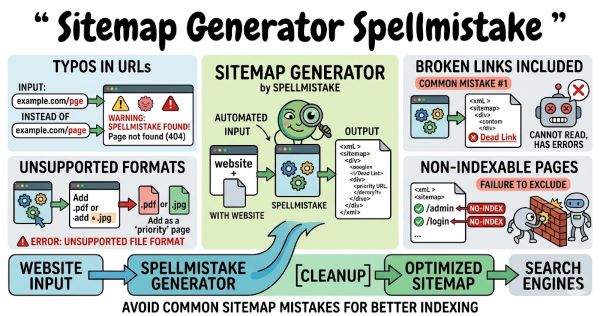
Sitemap generator by Spellmistake is a free tool that creates these XML sitemaps for you. You don’t need to manually list every page. You don’t need to code anything. You point the tool at your website, and it crawls your site to find all the pages, then generates a properly formatted XML sitemap.
The tool handles the technical details that most people find confusing. XML sitemaps have specific formatting requirements. The syntax needs to be correct or search engines might ignore the file. Spellmistake’s generator handles all of that automatically.
The sitemap it creates is compatible with Google, Bing, and other major search enginessearch engines. It follows the XML sitemap protocol that search engines expect. Once generated, you place the sitemap on your website where search engines can find it.
Why You Need an XML Sitemap
Some people think sitemaps are optional. They’re not. While search engines can find pages through links and crawling, a sitemap makes the job much easier.
Think of a sitemap as a roadmap for search engines. Instead of figuring out your site structure by following links, they have a clear list of every page and when it was last updated. This helps search engines find new pages faster. It helps them understand your site structure. It helps them prioritize which pages to crawl when your site has limited crawl budget.
Large websites benefit most from sitemaps. If your site has hundreds of pages, search engines might not find all of them without a sitemap. Even moderately sized sites benefit from the clarity a sitemap provides.
Small websites benefit too. A sitemap signals to search engines that your site is organized and properly maintained. It shows you care about being discoverable.
The real benefit of sitemaps comes when you have pages that are hard to reach through links. Maybe you have archived content that isn’t linked from anywhere else. Maybe you have new pages that haven’t had time to accumulate links. A sitemap ensures search engines find these pages.
How Sitemap Generator by Spellmistake Works
Using the tool is straightforward. Visit the Spellmistake website and find the sitemap generator. Enter your website URL. Click a button to start the process.
The tool crawls your entire website. It finds every page, every image, every file that can be indexed. It records the page URL, the date it was last modified, how important you think the page is, and how often the page content changes.
Once the crawl finishes, the tool generates an XML sitemap. The output is a properly formatted XML file that search engines recognize. You can download this file and upload it to your website.
The entire process takes just a few minutes for most websites. The tool handles the technical complexity so you don’t have to figure it out.
Features of Spellmistake Sitemap Generator
The tool includes features designed to make sitemap creation practical.
Automatic crawling discovers all pages on your website. You don’t manually list anything. The tool finds your pages automatically.
Multiple sitemap support handles large websites. If your site has too many pages for a single sitemap, the tool creates multiple sitemaps automatically. This is important because search engines have size limits for individual sitemap files.
URL prioritization lets you indicate which pages are most important. You can set priority levels so search engines focus crawl budget on your most valuable pages.
Change frequency indication tells search engines how often pages change. Some pages change daily. Others change rarely. The sitemap can communicate this to search engines.
Last modified dates show when pages were last updated. Search engines use this information to decide if they need to re-crawl pages.
Image inclusion ensures images on your site can be indexed. Image search is a real source of traffic. Including images in your sitemap helps them appear in search results.
Mobile URL support helps if you have mobile versions of pages separate from desktop versions. The tool can handle this complexity.
Spellmistake SEO Tools Beyond the Sitemap Generator
Spellmistake SEO tools include more than just the sitemap generator. The company offers several utilities that complement the sitemap tool.
Keyword research tools help you understand search volume for your target keywords. You can see which keywords have potential and which ones have high competition.
Rank tracking shows where your pages rank in search results for specific keywords. This helps you understand if your SEO efforts are working.
Backlink analysis shows which sites link to your website. Backlinks matter because they act as votes of confidence in your site’s quality.
Competitor analysis lets you see what your competitors are doing. You can identify keywords they rank for and strategies they use.
Content analysis reviews your website content and suggests improvements for SEO. It looks at things like keyword density, headings, and readability.
These tools work together to provide a complete SEO toolkit. The sitemap generator is the foundation, but the other tools help you understand what’s working and what needs improvement.
Page Size Checker by Spellmistake
Another useful tool in the Spellmistake collection is the page size checker by Spellmistake. This tool analyzes your web pages and reports their file size.
Page size matters because large pages load slowly. Slow loading pages frustrate visitors and hurt your search rankings. Google considers page speed a ranking factor. Pages that load quickly rank better than pages that load slowly.
The page size checker helps you identify which pages are bloated. Maybe you have images that are too large. Maybe you have unnecessary code or scripts. The tool points out the problems so you can fix them.
The checker provides recommendations for optimization. It might suggest compressing images, minifying code, or removing unused elements. Following these recommendations improves page speed and user experience.
Page speed impacts your entire website. Faster sites rank better. Faster sites get better user engagement. Visitors stick around longer and come back more often. The page size checker helps you identify opportunities to improve.
Integrating Sitemap Generator Into Your SEO Strategy
Creating a sitemap is just the beginning. Integrating it into your overall SEO strategy maximizes its benefits.
Submit to search engines. After generating your sitemap, submit it to Google Search Console and Bing Webmaster Tools. This alerts search engines that your sitemap exists and asks them to index it.
Update regularly. When you add new pages to your website, regenerate your sitemap. You should do this every few weeks if your site changes frequently. For static sites that rarely change, once every few months is fine.
Monitor search console. After submitting your sitemap, watch Google Search Console to see if search engines encounter any issues with it. Search Console will alert you if there are problems.
Optimize your internal linking. The sitemap supplements but doesn’t replace internal linking. Good internal links help search engines discover pages. Use internal links to direct visitors and search engines to your most important pages.
Improve page quality. A sitemap ensures search engines find your pages, but page quality determines if they rank. Create valuable content that visitors want to read and share.
Build backlinks. Sitemaps help search engines find your pages, but backlinks help establish authority. High-quality backlinks from relevant sites signal to search engines that your content is valuable.
Common Mistakes When Using Sitemaps
Understanding what not to do helps you avoid problems.
Forgetting to submit the sitemap. Creating a sitemap is useless if you don’t submit it to search engines. You must explicitly tell search engines your sitemap exists. Use Google Search Console and Bing Webmaster Tools.
Never updating the sitemap. Websites change. Pages get added, deleted, or updated. Your sitemap should reflect these changes. An outdated sitemap tells search engines your site isn’t actively maintained.
Including pages that shouldn’t be indexed. Some pages shouldn’t appear in search results. Draft pages, admin pages, or duplicate pages shouldn’t be in your sitemap. Review your sitemap to make sure it only includes pages you want indexed.
Ignoring sitemap errors. Search Console alerts you to problems with your sitemap. Don’t ignore these alerts. Fix the errors so search engines can process your sitemap properly.
Relying solely on the sitemap. A sitemap is one of many SEO tools. Don’t ignore other important factors like quality content, fast loading times, mobile friendliness, and good internal linking.
Using wrong priority levels. Not all pages should have the same priority. Mark your most important pages with high priority. This helps search engines understand what matters most on your site.
Technical Details of XML Sitemaps
If you’re curious about the technical side, understanding XML sitemap structure helps.
An XML sitemap is a text file with a specific structure. It starts with an XML declaration that tells readers it’s an XML file. Then comes a list of URLs, each with properties like modification date, change frequency, and priority.
The proper format is essential. One formatting error can break the entire sitemap. This is why using a generator like Spellmistake’s is valuable. It handles the formatting automatically.
Sitemaps have size limits. A single sitemap can contain up to 50,000 URLs and can’t exceed 50MB. Large websites with more pages than this need multiple sitemaps. A sitemap index file then lists all the individual sitemaps. Spellmistake’s generator handles this automatically.
Mobile sites sometimes have separate URLs for mobile and desktop versions. Modern responsive sites don’t usually need this, but if you have separate mobile URLs, your sitemap should reflect them. The generator can handle this if configured properly.
Measuring Sitemap Impact
How do you know if your sitemap is working? Look for these indicators.
Crawl statistics in Google Search Console. The crawl stats show how many pages Google has indexed. After submitting a sitemap, you should see improvement in indexation over time.
Coverage report. Search Console shows which pages Google has indexed and which it hasn’t. Your goal is to have as many pages indexed as possible.
Search appearance. Monitor how many of your pages appear in search results. More indexed pages usually means more search visibility.
Organic traffic. Track traffic from search engines. Improving indexation should eventually lead to more organic traffic as more pages appear in search results.
Search rank improvements. Over time, as more pages get indexed, you should see improvements in search rankings for relevant keywords.
These indicators show whether your sitemap is delivering real value.
When to Regenerate Your Sitemap
Your sitemap shouldn’t stay static forever. Regenerate it when necessary.
Add new pages. When you publish new content, regenerate your sitemap to include the new pages.
Delete pages. When you remove pages from your site, regenerate to remove them from the sitemap.
Major site restructure. If you reorganize your site’s structure or change URLs, regenerate your sitemap.
Regular refresh. Even if nothing major changed, regenerate periodically. This updates modification dates and other metadata.
For dynamic sites that change frequently, consider regenerating daily or weekly. For static sites, monthly regeneration is usually sufficient.
Key Takeaways
- Sitemap generator Spellmistake is a free tool that creates XML sitemaps automatically by crawling your website and discovering all pages.
- XML sitemaps help search engines find all your pages faster and understand your site structure. They’re especially important for large websites and sites with content that’s hard to reach through links.
- Sitemap generator by Spellmistake handles technical formatting automatically so you don’t need to understand XML structure to create a proper sitemap.
- After generating your sitemap, submit it to Google Search Console and Bing Webmaster Tools so search engines know it exists.
- Spellmistake SEO tools extend beyond the sitemap generator to include keyword research, rank tracking, backlink analysis, and content optimization tools.
- Page size checker by Spellmistake helps identify pages that load slowly by analyzing file size and providing optimization recommendations.
- Update your sitemap regularly as your website content changes. Monthly or quarterly regeneration is typical for most sites.
- Monitor Google Search Console after submitting your sitemap to watch for errors and track how many pages are indexed.
- A sitemap supplements but doesn’t replace other SEO efforts. Quality content, fast loading times, and good internal linking matter just as much.
- Avoid common mistakes like forgetting to submit your sitemap, never updating it, or including pages that shouldn’t be indexed.
- The real value of a sitemap appears over time as more pages get indexed and appear in search results.
- If you manage a website and haven’t created a sitemap yet, using Spellmistake’s generator takes just a few minutes and can deliver real SEO benefits.