Your hair is a tangled mess again. You brush it out in the morning, and by noon it’s knotted up like someone twisted it on purpose. If this is your daily reality, you’re not alone. The question “why does my hair tangle so easily” is something millions of people ask themselves.
The good news is that learning how to keep hair from tangling is achievable. It’s not about spending a fortune on products or spending hours on your hair routine. It’s about understanding what causes tangles and taking specific steps to prevent them.
Why Does Your Hair Get Tangled So Easily?
Before you can fix the problem, you need to understand what’s actually happening. Hair tangles for real reasons, not just because you’re unlucky.
Your hair is made of protein structures called keratin. Each strand has a protective outer layer called the cuticle. When this layer is smooth and lies flat, strands slide past each other easily. When it’s rough or raised, strands catch on each other and create knots.
This is why dry hair tangles more than healthy hair. Dry strands have cuticles that stick up. They’re like tiny hooks catching on neighboring hairs. Add friction, movement, and time, and you’ve got yourself knotted hair.
Environmental factors make it worse. Humidity, wind, pollution, and heat all damage the cuticle layer. Chlorine and salt water are particularly harsh. If you swim regularly, your hair becomes more prone to tangling.
Your hair type matters too. Fine, curly, or textured hair tangles more easily than thick, straight hair. The curls naturally create more surface area where fibers can catch. The same goes for long hair. Longer strands have more opportunity to entangle as you move through your day.
Chemical damage adds to the problem. Color-treated hair, relaxed hair, and hair that’s been through heat styling repeatedly becomes more vulnerable to tangling. The cuticles are already compromised, so they tangle faster.
Understanding Hair Knots and Tangles
Hair knots are slightly different from general tangles. A knot is when a loop forms in a strand and tightens. Tangles are when multiple strands cross over each other without necessarily forming loops.
Why does my hair get so tangled is a question that often includes knots. These form more easily in certain hair types and conditions. Curly hair is prone to knots because the natural curl pattern creates loops. Fine hair knots easily because individual strands are delicate and twist readily. Long hair develops knots as gravity and movement cause strands to wrap around each other.
Some people have genuinely knotty hair that seems to develop knots overnight. This isn’t random. It usually means the hair is either damaged, dry, or both. The cuticles are raised, strands catch easily, and knots form quickly.
Understanding this helps you address the root cause rather than just treating symptoms. You’re not fighting your hair’s nature. You’re working with the actual mechanics of how hair behaves.
How to Keep Hair from Tangling: Start with Washing
The process of keeping your hair from tangling starts in the shower. How you wash your hair sets the stage for everything that comes after.
Use lukewarm water, not hot. Hot water opens the hair cuticle even more, making strands rough and prone to catching. Lukewarm water cleans just as well while being gentler on the cuticle layer.
Choose a shampoo formulated for your hair type. If you have dry or curly hair, use a moisturizing formula. If your hair tangles easily, avoid clarifying shampoos that strip moisture. Those are meant for occasional use, not daily washing.
Condition generously. This is not optional if you want to know how to keep hair from tangling. Conditioner smooths the cuticle layer back down. It’s the difference between rough, catching strands and smooth, slippery ones. Don’t skimp on this step.
When you condition, apply it to the middle and ends of your hair, not the scalp. Leave it on for at least one to two minutes. Some people use conditioning masks instead of regular conditioner once or twice a week for extra smoothing power.
The direction matters. When you rinse, rinse from roots to ends. This helps the cuticles lay flat in the right direction. Rinsing upward roughens the cuticle back up.
Detangling: Do It Right
How you handle wet hair is critical. Wet hair is more fragile than dry hair. The swelling from water makes strands vulnerable to breaking. This is when tangles form most easily.
After washing, gently squeeze water out. Don’t wring or twist. Wring your hair and you’re actively creating tangles.
Use a wide-tooth comb on wet hair, not a brush. Brushes pull and break wet strands. Combs glide through with less damage. Start at the ends and work your way up, removing tangles as you go.
For kids detangler spray or regular detangler products, apply them while hair is still wet and dripping. These products help strands slide apart. They work best on wet hair because water provides additional lubrication.
If your hair is extremely knotted, don’t force the comb through. Work on small sections. Use your fingers to gently loosen knots before combing. Patience here prevents breakage and split ends.
Let hair air dry if possible, or use a microfiber towel or cotton t-shirt instead of a regular towel. Regular towels are rough and create friction that causes tangles. The smoother material of a t-shirt reduces this friction significantly.
Why Does My Hair Tangle So Easily During the Day?
Even with perfect morning hair, tangles develop as your day goes on. Understanding this helps you prevent new tangles from forming.
Friction is the main culprit. Your hair rubs against your neck, shoulders, shirt, and anything else it touches. This friction causes the cuticle to rise and strands to catch. Longer hair experiences more friction, which is why people with long hair often struggle with tangles.
Movement creates tangles too. Wind, exercise, and head movement all cause hair strands to cross and entangle. The more your hair moves, the more tangles develop.
Static electricity plays a role as well. When strands build up static charge, they repel each other but also cling together in weird ways. This creates tangles and frizz.
Dry hair tangles faster than moist hair. Throughout the day, your hair loses moisture. Without moisture, the cuticles stay raised and strands catch. This is why your hair might look fine in the morning but tangled by evening.
Protective Styling Reduces Tangles
One of the best ways to prevent tangles is to keep your hair contained. Protective styles literally protect your hair from the friction and movement that causes tangling.
Braids are effective. When hair is braided, strands can’t move freely and tangle. The braid holds everything in place. French braids, Dutch braids, and simple three-strand braids all work.
Buns and twists work similarly. These styles keep hair confined, reducing surface area exposed to friction. They’re especially good overnight. Hair tangles less while you sleep if it’s in a protective style.
If you prefer to wear your hair down, try a loose braid or twisted style. This keeps most of your hair controlled while allowing some freedom.
Wrapping hair in a silk or satin scarf at night prevents sleep tangles. Your hair rubs against a cotton pillowcase all night, creating friction and knots. Silk doesn’t create this friction. A satin bonnet or pillowcase does the same job.
For people with curly or textured hair, these protective styles are essential. The natural texture tangles more easily, so keeping it protected preserves the style and prevents knotty hair from developing.
Products That Help Keep Hair from Tangling
Beyond the basic shampoo and conditioner, certain products can help prevent tangles.
Leave-in conditioner is useful. Apply it to damp hair after showering. It keeps strands moisturized and the cuticles smooth throughout the day. This reduces the tendency for strands to tangle.
Hair oils and serums seal the cuticle and add shine. They create a smooth surface that strands slide across instead of catching. Use these sparingly. Too much product weighs hair down and looks greasy. A few drops on the ends is plenty.
Kids detangler spray works for adults too. These are formulated to make strands slippery and separate easily. They’re especially helpful if your hair tangles easily or if you have kids with hair prone to knots. Spray it on damp hair before combing.
Mousse or styling cream can help. These products provide hold and also smooth the cuticle. They prevent flyaways and reduce friction-caused tangles.
Anti-frizz products often have built-in detangling benefits. They seal the cuticle, which both prevents frizz and reduces tangling.
When choosing products, look for moisturizing formulas. Avoid anything that’s drying or clarifying if your goal is tangle prevention. Dry hair tangles. Moisturized hair doesn’t.
Heat Styling and Hair Tangles
Heat styling damages the cuticle layer. This makes tangles worse. If you use a blow dryer, flat iron, or curling tool, you’re working against tangle prevention.
That said, if you’re going to use heat, do it correctly. Always apply a heat protectant spray first. This creates a barrier between the heat and your hair.
Blow dry in the direction your hair grows. This means drying from roots toward ends, which helps the cuticles lay flat. Drying the opposite direction roughens the cuticles and causes more tangling.
Let hair cool before touching it. Hot hair is still in a vulnerable state. Once it cools, the cuticles set in their flattened position. If you touch or style while hot, you’re disrupting this.
Limit heat styling to a few times per week if possible. Every time you use heat, you damage the cuticle. That damage accumulates, making hair increasingly prone to tangling. The less heat, the better.
If your hair tangles easily, skipping heat styling entirely is the best option. Air drying or using heatless styling methods preserve the cuticle and minimize tangling.
What About Your Sleeping Position?
How you sleep affects hair tangles. If you sleep on your back, your hair doesn’t rub against the pillow, so you get fewer sleep tangles. If you sleep on your side or stomach, your hair experiences friction all night.
This is why a silk or satin pillowcase makes such a difference. The smooth surface reduces friction. Your hair slides across it instead of catching and tangling.
Silk scrunchies are another option. Instead of a regular hair tie, use one made of silk or satin. These don’t create friction or snag your hair. Cotton hair ties rough up the cuticle and can cause breakage and tangles.
If you sleep with wet hair, you’re basically guaranteeing tangles. Wet hair is fragile and tangles easily. Let it dry first, or put it in a protective style while damp.
Some people sleep with their hair in a loose braid or twisted style. This keeps everything controlled without being tight enough to damage the hair. It’s a good compromise if you like sleeping with your hair down but want to prevent tangles.
For Curly Hair and Textured Hair
People with curly or textured hair often ask how to keep curly hair from tangling. The answer involves understanding that curl patterns naturally create more surface area where tangles form.
For curly hair, moisture is even more critical. Curly strands dry out faster than straight hair. Dry curls tangle readily. Deep conditioning treatments and leave-in conditioners are not optional. They’re essential.
Use the praying hands method when applying conditioner or products to curly hair. Smooth products between your hands, then apply from roots to ends with your hands pressed together. This prevents disrupting the curl pattern and causing frizz and tangles.
Finger-detangle instead of using combs when possible. Your fingers are gentler and allow you to feel where tangles are forming. Work through them carefully without breaking strands.
Use a microfiber towel or t-shirt to remove water. Regular towels disrupt curls and create frizz and tangles. Microfiber is gentler and preserves the curl shape.
Consider using styling products formulated for curly hair. Curl-defining creams and gels help hold the curl pattern in place, which prevents strands from moving and tangling.
For overnight, put curly hair in a pineapple (a high ponytail on top of the head) or bonnet. This keeps the curl pattern intact and prevents sleep tangles.
Ratty Hair and Serious Tangle Problems
If you have ratty hair that seems permanently matted or knotted despite your best efforts, there might be an underlying issue.
Sometimes ratty hair is the result of accumulated damage. If your hair has been colored, heat-styled, and roughly handled for years, the cuticles are severely compromised. At this point, simple prevention isn’t enough. You need a reset.
Cut off the damaged ends. Get a good haircut that removes the most severely affected hair. This gives you a fresh start with healthier hair.
Follow a strict moisture and repair routine for several weeks. Deep condition weekly. Avoid heat styling. Avoid tight hairstyles. Let your hair recover.
Use only gentle, moisturizing products. Avoid sulfates, which strip moisture. Avoid silicones, which build up over time.
If ratty hair persists despite these efforts, consult a dermatologist. In rare cases, severe tangling can indicate a medical condition like trichokinesis (a compulsive disorder) or hair loss conditions. A professional can evaluate and recommend treatment.
Quick Daily Prevention Tips
Beyond the bigger picture, small daily habits prevent tangles from forming.
Keep your hair covered in wind. Wind causes strands to move and tangle. A hat, scarf, or bun keeps hair protected.
Use a silk pillowcase. This single change reduces sleep tangles significantly.
Tie your hair back loosely when it’s wet. Wet hair is fragile and tangles easily. A loose ponytail or bun keeps it contained without damaging it.
Carry a small brush or wide-tooth comb. Touch up tangles as they form rather than letting them accumulate.
Mist your hair with a light spray of water and leave-in conditioner if it’s getting dry throughout the day. This keeps the cuticles smooth.
Avoid touching your hair constantly. Every touch creates friction. Let your hair be.
Summary: How to Keep Hair from Tangling
Understanding how to keep hair from tangling comes down to one principle: keep the hair cuticle smooth and protect strands from friction and damage.
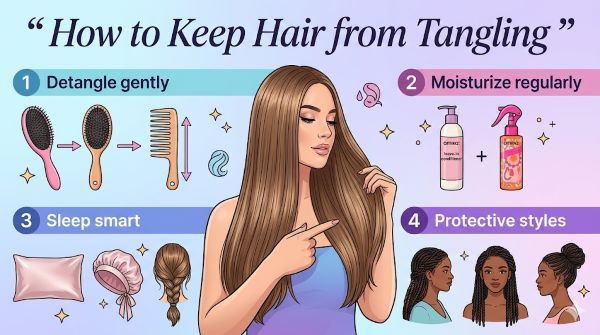
Start with proper washing using lukewarm water and generous conditioning. Detangle gently using wide-tooth combs, not brushes. Apply leave-in conditioner and products that smooth the cuticle. Protect your hair overnight with a silk pillowcase or protective style.
Limit heat styling and chemical damage. When you use heat, protect your hair first. Style your hair in ways that reduce movement and friction.
For curly or textured hair, add extra moisture and gentleness. For severely damaged hair, cut off the worst parts and reset your routine.
Most tangles aren’t inevitable. They’re the result of preventable damage and friction. Change your approach, and your hair changes. You don’t have to live with tangles.