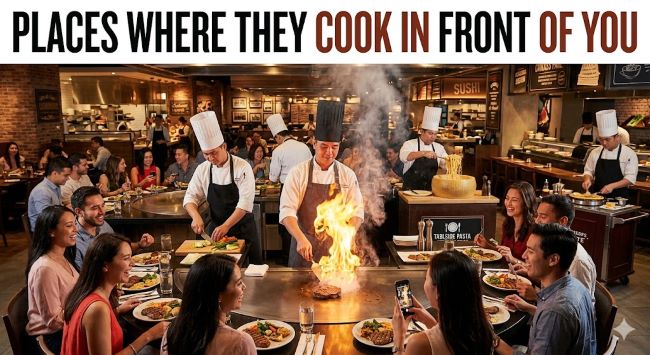
You sit at a large communal table with other guests. A chef approaches the cooking surface in front of you and begins chopping vegetables with precision. He places onions in concentric circles and lights them on fire, creating a flaming volcano. He tosses shrimp tails and catches them in his hat. You’re not just eating. You’re watching a performance. Places where they cook in front of you offer dinner as entertainment, combining skilled cooking with theatrical flair.
These interactive dining experiences go by different names, and understanding teppanyaki vs hibachi helps you choose the right restaurant for your experience. Whether you’re looking for Benihana specifically or exploring other options, this guide walks you through what these restaurants offer and how to find them in your area.
What Are Places Where They Cook in Front of You
Places where they cook in front of you are restaurants where a skilled chef prepares your meal on a griddle or grill positioned directly at your dining table. You watch the cooking process from start to finish. The chef interacts with diners, performs tricks, and creates an entertainment experience alongside food preparation.
This dining style originated in Japan and became wildly popular in America, particularly after Benihana opened its first restaurant in New York City in 1964. The concept immediately appealed to Western diners who enjoyed both the skillfully prepared food and the theatrical presentation.
The appeal is multifaceted. You see exactly what goes into your meal. The chef controls portion sizes and cooking time based on your preferences. The communal seating arrangement creates a social atmosphere where strangers become fellow audience members. The performance element makes even ordinary meals memorable.
Understanding Teppanyaki vs Hibachi
The biggest confusion with places where they cook in front of you centers on terminology. Most Americans use “hibachi” and “teppanyaki” interchangeably, but they’re different cooking methods. Understanding teppanyaki vs hibachi clarifies what experience you’ll actually get.
Teppanyaki uses a large, flat iron griddle (called a teppan) heated by propane. The solid cooking surface allows chefs to prepare even-cooked proteins, vegetables, and fried rice. Teppanyaki emerged as a post-World War II Japanese cuisine that combined Western steakhouse concepts with Japanese techniques. The theatrical presentation is a key element. Chefs perform knife tricks, toss ingredients, create onion volcanoes, and engage diners.
Hibachi traditionally refers to a small, portable Japanese heating device using charcoal. In Japan, hibachi was used for warming homes more than cooking. True hibachi grills feature an open grate design rather than a flat surface.
The terminology confusion happened because when teppanyaki restaurants opened in America during the 1960s, restaurant owners needed simple names customers would remember. “Hibachi” sounded Japanese and was easier for Americans to pronounce than “teppanyaki.” The name stuck, even though what’s served in most American “hibachi restaurants” is actually teppanyaki cooking.
This means when you visit a place advertising “hibachi,” you’re typically experiencing teppanyaki cooking with theatrical chef performances. True hibachi restaurants are rare in America.
Benihana: The Most Famous Example
Benihana represents the most recognizable place where they cook in front of you in America. Founded by Rocky Aoki in 1964, Benihana brought the teppanyaki dining experience to mainstream American audiences.
Aoki recognized that the theatrical cooking style would appeal to Americans who wanted exciting, interactive dining. He named the restaurant after his parents’ coffee shop in Tokyo. The concept worked spectacularly. Benihana expanded to over 70 locations across America, Canada, and other countries.
At Benihana, you sit around a large flat iron griddle with other guests. Your personal chef prepares your entire meal on the griddle in front of you. The experience includes:
Appetizers and soup prepared on the griddle before your main course.
Vegetable preparation with theatrical knife work and sometimes audience participation.
Protein cooking where chefs demonstrate flipping techniques and portion control.
Fried rice creation as the grand finale, often with additional tricks and performance.
Benihana maintains consistent quality and presentation across locations. Chefs train extensively to perform the theatrical elements while maintaining food quality. The menu focuses on steak, chicken, seafood, and shrimp combinations.
Other Teppanyaki and Hibachi Chains
Beyond Benihana, many restaurant chains offer places where they cook in front of you:
Hibachi San Antonio and similar regional chains provide teppanyaki-style dining in their local areas. These independent or smaller chain restaurants often feature similar theatrical cooking with their own unique twists.
House of Genji operates as another option, though with varying locations and experiences depending on the franchise.
Osaka Mesa represents another regional player in the teppanyaki dining space.
Maison Kasai offers another variation on the teppanyaki concept.
Oro by Nixta brings a different culinary approach to interactive cooking.
These restaurants vary in quality, atmosphere, and theatrical elements. Some closely mirror the Benihana experience with high-energy performances. Others focus more on food quality with less emphasis on tricks. Reading reviews before visiting helps set expectations.
What to Expect When You Visit
When you arrive at a place where they cook in front of you, expect the following experience:
Communal seating: You’ll sit around a large griddle with other parties. If you want private seating, ask in advance.
Menu ordering: You’ll select protein and sides before sitting down. Most restaurants offer steak, chicken, shrimp, and seafood options.
Chef assignment: A specific chef gets assigned to your griddle. Their personality and performance style influences your experience.
Appetizer course: You’ll receive soup or a small appetizer prepared on the griddle as the chef gets warmed up.
Main course preparation: Your chef prepares vegetables, proteins, and fried rice in sequence. Cooking takes 30-45 minutes depending on the restaurant.
Interaction: Friendly chefs engage with diners, answer questions, and perform tricks. Less experienced diners sometimes get extra attention from showman chefs.
Portion control: Chefs can adjust portions as they cook. Tell your chef before cooking starts if you want extra vegetables or less protein.
Finding Places Where They Cook in Front of You
Benihana locations are easy to find with a simple web search or Google Maps. Enter “Benihana near me” to see locations and hours.
For other places where they cook in front of you, search terms like “teppanyaki restaurants near me” or “hibachi steakhouse near me.” These searches return local options with reviews and ratings.
Google Maps filters help. Search for “teppanyaki” and sort by distance or rating. Read reviews from other diners to understand what experience you’ll get.
Local Asian cuisine guidebooks or food blogs often feature places where they cook in front of you. These sources provide context about quality, authenticity, and entertainment level.
Ask friends and family for recommendations. Personal experiences with specific chefs and locations provide valuable insights.
Tips for the Best Experience
Call ahead for reservations: Popular places where they cook in front of you fill up quickly, especially on weekends. Reservations ensure seating.
Request a specific chef if you’ve had a favorite before: Some restaurants accommodate requests for chefs guests enjoyed previously.
Sit at the grill if possible: The full experience requires being at the cooking surface. Private table seating misses the performance aspect.
Arrive hungry: Portions are generous. A typical meal includes soup, vegetables, protein, and fried rice.
Budget appropriately: Teppanyaki dining costs more than standard restaurants due to the chef’s skills and the interactive experience.
Plan for special occasions: Places where they cook in front of you work wonderfully for birthdays, anniversaries, and celebrations. Many restaurants accommodate birthday songs and special requests.
Let your chef know about dietary restrictions: Chefs can accommodate vegetarian, gluten-free, and other dietary needs when you communicate in advance.
The Entertainment Factor
What distinguishes places where they cook in front of you from regular restaurants is the entertainment. You’re not just eating. You’re watching a skilled professional perform.
Experienced chefs build a show around the cooking. They engage with diners, read the crowd’s energy, and adjust their performance accordingly. Some chefs are comedians. Others focus on impressive knife skills. Most combine both.
The performance serves a purpose. It maintains your interest while cooking happens. It creates a shared experience with other diners at your table. It makes ordinary meals memorable.
The theatrical elements like onion volcanoes and shrimp-tail catching evolved organically. Chefs found audiences loved these moments, so they became standard. They’re not essential to good cooking, but they enhance the dining experience.
Key Takeaways
- Places where they cook in front of you are interactive restaurants featuring chefs who prepare your meal on a griddle or grill at your table. This concept originated in Japan and became famous through Benihana.
- Teppanyaki vs hibachi: Teppanyaki uses flat iron griddles with theatrical performances. Hibachi traditionally refers to charcoal heating devices. In America, “hibachi restaurants” typically serve teppanyaki-style cooking, not true hibachi.
- Benihana opened in 1964 and popularized teppanyaki dining in America. It remains the largest and most consistent chain offering places where they cook in front of you.
- Other options include Hibachi San Antonio, House of Genji, Osaka Mesa, Maison Kasai, and Oro by Nixta, though availability and quality vary by location.
- Expect communal seating, theatrical knife work, sequential course preparation, and interactive chef performances when you visit these restaurants.
- Reserve ahead as places where they cook in front of you fill up quickly. Sit at the grill for the full experience rather than requesting private seating.
- These restaurants work wonderfully for special occasions and celebrations. Many restaurants accommodate birthday songs and can adjust portions for dietary restrictions.
- The entertainment component is as important as the food. Skilled chefs balance cooking competence with showmanship to create memorable dining experiences.