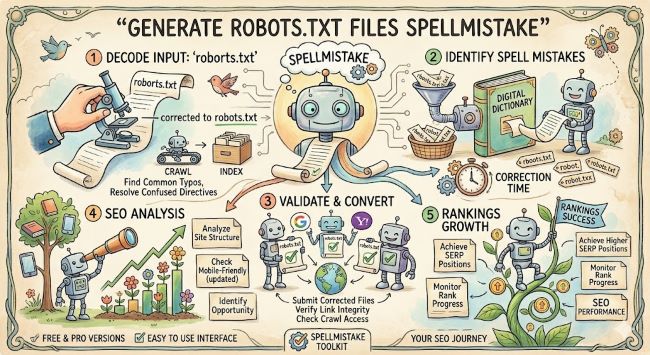
The phrase “generate robots.txt files spellmistake” represents tools combining robots.txt file generation with syntax validation and error detection capabilities. Generate robots.txt files spellmistake tools help website owners and developers create properly formatted robots.txt files while identifying potential errors that could disrupt search engine crawling. Understanding how to generate robots.txt files spellmistake and what errors to avoid ensures search engines crawl your site appropriately according to your specifications. This comprehensive guide covers robots.txt fundamentals, how to generate robots.txt files spellmistake, common errors, best practices, and selecting appropriate tools for robots.txt creation and validation.
Understanding Robots.txt and Why It Matters
Comprehending robots.txt basics clarifies why generate robots.txt files spellmistake exists.
Robots.txt is a text file placed in your website root directory that tells search engine crawlers which parts of your site to crawl and which to ignore. Generate robots.txt files spellmistake helps create this critical file correctly.
Search engine compliance depends on properly formatted robots.txt that crawlers understand and respect. Errors in generate robots.txt files spellmistake could misdirect crawler behavior.
Crawl budget optimization uses robots.txt to direct crawler resources toward important pages and away from non-essential content. Generate robots.txt files spellmistake ensures efficient resource allocation.
Privacy and security involve restricting crawling of sensitive directories and files, functionality that generate robots.txt files spellmistake facilitates safely.
Duplicate content control uses robots.txt to prevent crawling of duplicate or parameter-heavy pages that generate robots.txt files spellmistake helps identify and block.
Crawl delay management allows specifying how frequently crawlers should visit your site, a feature generate robots.txt files spellmistake tools support.
Sitemap submission through robots.txt directs crawlers to sitemap locations, which generate robots.txt files spellmistake automates within proper syntax.
Robots.txt Syntax and Rules
Understanding structure clarifies what generate robots.txt files spellmistake must produce.
User-agent directives specify which crawler type rules apply to, with “User-agent: *” applying to all crawlers. Generate robots.txt files spellmistake must format these correctly.
Disallow directives prevent crawling of specified paths, like “Disallow: /admin/” blocks the admin directory. Generate robots.txt files spellmistake handles path specification properly.
Allow directives override disallow rules for specific paths, useful when disallowing parent directories but allowing subpaths. Generate robots.txt files spellmistake supports this nuanced control.
Crawl-delay rules specify minimum seconds between crawls, though most crawlers ignore this in favor of robots.txt Crawl-Delay or X-Robots-Tag. Generate robots.txt files spellmistake includes this option.
Sitemap directives point to sitemap locations using “Sitemap: [URL]” format, which generate robots.txt files spellmistake must format correctly for crawler discovery.
Request-rate rules in some tools specify crawling frequency, though support varies across search engines. Generate robots.txt files spellmistake may include this advanced feature.
Comment syntax uses “#” for comments explaining rules, which generate robots.txt files spellmistake preserves or generates appropriately.
Case sensitivity matters for paths but not directives, a nuance that generate robots.txt files spellmistake tools must handle correctly.
What Generate Robots.txt Files Spellmistake Tools Do
Understanding capabilities guides appropriate use.
File generation creates properly formatted robots.txt content from user specifications. Generate robots.txt files spellmistake automates syntax compliance.
Visual rule builders in generate robots.txt files spellmistake allow non-technical users to specify rules through forms rather than writing syntax directly.
Syntax validation checks generated robots.txt for format errors that would cause crawler misinterpretation. Generate robots.txt files spellmistake identifies issues before deployment.
Error detection identifies common mistakes like improper indentation, incorrect directives, or malformed paths. Generate robots.txt files spellmistake catches these errors.
Rule conflict detection identifies contradictory directives like disallowing “/” while allowing subdirectories. Generate robots.txt files spellmistake flags logical inconsistencies.
Testing and preview shows how generate robots.txt files spellmistake output would be interpreted by crawlers, helping verify correctness before deployment.
Template libraries provide generate robots.txt files spellmistake starting points for common scenarios, reducing creation time for typical implementations.
Download and deployment options in generate robots.txt files spellmistake tools simplify getting files into production servers.
Common Robots.txt Errors
Understanding mistakes clarifies what generate robots.txt files spellmistake should prevent.
Typos in directives like “Disalow” instead of “Disallow” cause entire rules to be ignored, an error generate robots.txt files spellmistake should catch.
Incorrect path syntax such as missing leading “/” or using backslashes causes rule misinterpretation that generate robots.txt files spellmistake prevents.
Whitespace errors including spaces before directives or inconsistent indentation confuse parsers, which generate robots.txt files spellmistake should validate.
Missing user-agent sections means rules apply incorrectly or globally when intended for specific crawlers, an error generate robots.txt files spellmellmistake validates against.
Overlapping rules create ambiguity when multiple user-agent blocks specify conflicting directives, which generate robots.txt files spellmistake should warn about.
Blocking everything accidentally from improperly structured rules prevents all crawling, a critical error generate robots.txt files spellmistake prevents.
Infinite loops in paths from overly broad rules waste crawler resources, which generate robots.txt files spellmistake analysis can identify.
Character encoding issues with non-ASCII characters cause parsing failures that generate robots.txt files spellmistake should handle appropriately.
How to Generate Robots.txt Files Spellmistake
Using tools effectively requires understanding the process.
Select user-agent targeting in generate robots.txt files spellmistake — specify whether rules apply to all crawlers or specific ones like Googlebot.
Define disallow paths in generate robots.txt files spellmistake by listing directories or file patterns to block from crawling.
Specify allow paths where generate robots.txt files spellmistake overrides parent directory disallows for specific subdirectories.
Set crawl delays if generate robots.txt files spellmistake tool supports it, specifying minimum seconds between crawler requests.
Add sitemap locations in generate robots.txt files spellmistake by providing sitemap file URLs for crawler discovery.
Review generated syntax from generate robots.txt files spellmistake before deploying, verifying formatting and logic correctness.
Test rules using generate robots.txt files spellmistake preview functionality, simulating how crawlers would interpret rules.
Download and deploy the generate robots.txt files spellmistake output to your server root directory as “/robots.txt”.
Best Practices for Robots.txt Creation
Leveraging generate robots.txt files spellmistake effectively requires strategic approach.
Block only necessary content when using generate robots.txt files spellmistake, avoiding over-restriction that prevents legitimate crawling.
Use specific paths in generate robots.txt files spellmistake rather than overly broad blocks, allowing more precise control.
Avoid blocking CSS and JavaScript when using generate robots.txt files spellmistake, as search engines need these for understanding page content.
Don’t block images unless sensitive, since blocking images in generate robots.txt files spellmistake hurts image search visibility unnecessarily.
Include sitemap reference in generate robots.txt files spellmistake to help crawlers discover all pages efficiently.
Test thoroughly using generate robots.txt files spellmistake testing tools before deploying to production.
Monitor crawler behavior after deploying generate robots.txt files spellmistake to verify crawlers follow rules appropriately.
Keep robots.txt simple — overly complex generate robots.txt files spellmistake implementations invite mistakes and maintenance issues.
Appropriate Use Cases for Generate Robots.txt Files Spellmistake
Understanding when tools matter most clarifies their value.
New websites benefit from generate robots.txt files spellmistake when creating initial robots.txt, establishing proper crawling from launch.
SEO migrations use generate robots.txt files spellmistake to update rules during URL structure changes, redirects, or platform migrations.
Development environments employ generate robots.txt files spellmistake to prevent crawling of staging sites before production deployment.
Content restriction applies generate robots.txt files spellmistake to block private directories, login pages, and sensitive content from indexing.
Duplicate content management uses generate robots.txt files spellmistake to prevent crawling of parameter-heavy pages creating duplicate content issues.
Crawl budget optimization applies generate robots.txt files spellmistake to focus crawler resources on valuable pages for large sites.
Testing and experimentation uses generate robots.txt files spellmistake when testing different crawling strategies before permanent implementation.
Security Considerations with Generate Robots.txt Files Spellmistake
Understanding limitations prevents false security assumptions.
Robots.txt is not secure — generate robots.txt files spellmistake shouldn’t be relied upon for blocking truly sensitive content, as anyone can read the file.
Sensitive paths get exposed in robots.txt, so generate robots.txt files spellmistake reveals directory structure and sensitive locations to anyone reading the file.
Proper authentication remains essential — generate robots.txt files spellmistake blocks crawlers but not malicious users with direct access.
Disallow blocks aren’t encrypted — generate robots.txt files spellmistake creates plaintext directives that anyone can read and follow to blocked content.
Truly sensitive content requires password protection, IP restrictions, or encryption rather than just robots.txt blocking via generate robots.txt files spellmistake.
Compliance considerations mean generate robots.txt files spellmistake alone doesn’t satisfy privacy or security requirements for sensitive data.
Choosing Quality Generate Robots.txt Files Spellmistake Tools
Evaluating options ensures reliable results.
Syntax validation quality matters for generate robots.txt files spellmistake, checking for format errors and logic consistency.
User interface clarity helps generate robots.txt files spellmistake usability, with intuitive design reducing errors for non-technical users.
Preview functionality in generate robots.txt files spellmistake allows testing rules before deployment, critical for verification.
Template availability in generate robots.txt files spellmistake provides starting points for common scenarios, reducing creation time.
Testing tools built into generate robots.txt files spellmistake allow simulating crawler behavior and rule interpretation.
Error explanations from generate robots.txt files spellmistake help users understand and fix issues rather than just flagging problems.
Download options in generate robots.txt files spellmistake simplify getting files into production.
No account requirements preferred for generate robots.txt files spellmistake tools to avoid unnecessary signup friction.
Robots.txt vs Meta Robots Tags
Understanding complementary approaches clarifies roles.
Robots.txt controls crawler access site-wide, making generate robots.txt files spellmistake appropriate for broad restrictions.
Meta robots tags control individual page indexing, separate from robots.txt and generate robots.txt files spellmistake scope.
Combined approach uses generate robots.txt files spellmistake for directory-level blocks while using meta robots tags for page-level control.
Crawl efficiency favors robots.txt that generate robots.txt files spellmistake creates, preventing crawlers from even requesting blocked pages.
Flexibility differences mean meta robots tags override robots.txt at page level, useful for exceptions to generate robots.txt files spellmistake rules.
Key Takeaways
- Generate robots.txt files spellmistake tools combine robots.txt creation with syntax validation and error detection, helping webmasters create properly formatted crawling directives.
- Robots.txt files control which parts of websites search engine crawlers can access, making proper generation through generate robots.txt files spellmistake critical for SEO.
- Common robots.txt errors including typos, incorrect syntax, whitespace issues, and overlapping rules are caught by generate robots.txt files spellmistake validation features.
- Syntax validation in generate robots.txt files spellmistake prevents deployment of non-functional robots.txt files that crawlers would ignore or misinterpret.
- Best practices involve blocking only necessary content, using specific paths, avoiding blocking CSS/JavaScript, including sitemap references, and testing thoroughly before deployment.
- Visual rule builders in generate robots.txt files spellmistake tools allow non-technical users to create robots.txt without learning syntax directly.
- Robots.txt should not be used for security purposes — generate robots.txt files spellmistake creates plaintext files anyone can read, so sensitive content requires proper authentication.
- Development environments and staging sites benefit from generate robots.txt files spellmistake blocking to prevent pre-launch crawling and indexing.
- Preview and testing functionality in generate robots.txt files spellmistake tools verify rule interpretation before deployment to production servers.
- Crawl budget optimization particularly benefits large sites from proper generate robots.txt files spellmistake implementation directing crawler resources appropriately.
- Generate robots.txt files spellmistake tools should offer error explanations helping users understand and correct issues rather than just flagging problems.
- Robots.txt works alongside meta robots tags, with generate robots.txt files spellmistake handling site-wide crawling control while page-level tags provide exceptions.