You’re shopping for a shirt and see both button up and button down described in the product listing. You assume they’re the same thing. After all, both have buttons. But then you notice something different about the collar. This small detail actually matters more than you think. Understanding the difference between button up and button down helps you choose appropriate shirts for different occasions and dress codes.
The confusion is understandable because the terms sound similar and refer to overlapping concepts. However, the difference between button up and button down comes down to one specific feature: the collar. This seemingly minor detail affects formality level, styling options, and when you should wear each shirt type. Once you understand this distinction, you’ll make better choices when building your wardrobe.
What Is a Button-Up Shirt
A button up shirt is any shirt with buttons running down the front closure, from the neckline to the hem. This definition is broad and covers many shirt types. The key feature of a button up is that you fasten the shirt by buttoning up the front placket.
Button up shirts come in various styles and formality levels. A crisp white dress shirt with a spread collar is a button up. A casual flannel shirt is also a button up. A linen vacation shirt is a button up. The term simply describes the closure mechanism, not the formality or fabric.
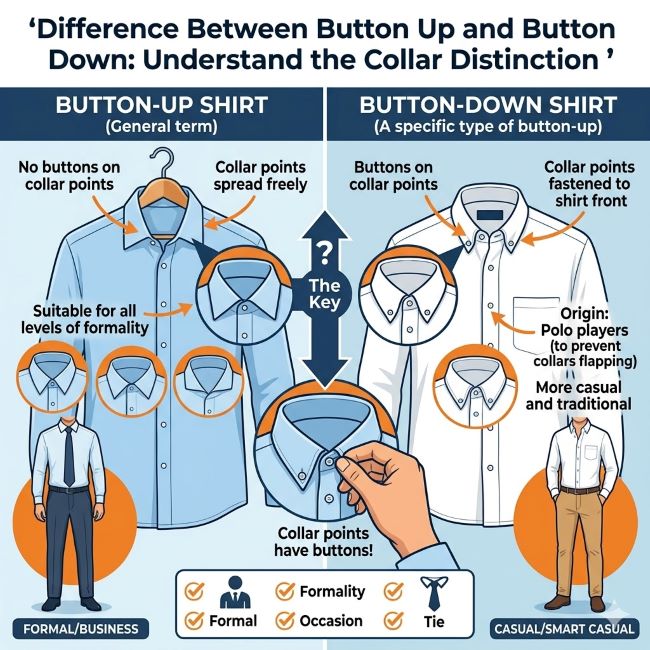
The collar on a button up shirt sits freely without fastening buttons. Whether it’s a point collar, spread collar, or cutaway collar, the collar points are not secured to the shirt body. This open collar design creates a clean, uninterrupted line from the collar down the shirt front.
Button up dress shirts represent the dressier end of the spectrum. These are typically crafted from premium fabrics like cotton or linen blends. They feature a tailored construction designed to pair with suits, ties, and formal wear. Button up dress shirts work for business settings, formal events, and professional occasions.
What Is a Button-Down Shirt
A button down shirt is a specific type of button up shirt with one distinguishing feature: small buttons sewn onto the collar points. These buttons fasten to buttonholes on the underside of the collar, securing the collar points to the shirt body.
This specific design detail creates the difference between button up and button down. While all button down shirts are technically button ups, not all button up shirts have this collar-fastening feature.
The purpose of the collar buttons is functional. They keep the collar points from flapping or curling. This design originated with English polo players in the 19th century. Players needed their collars to stay in place while riding horses at full gallop. Pinning collars was temporary. Adding buttons provided a permanent solution.
Today, button down collars are sometimes called polo collars due to their sporting origins. The buttons give the button down shirt a distinctive look. When properly fastened, the collar sits flatter and closer to the neck than a free-standing collar.
The Core Difference Explained Simply
Here’s the clearest way to understand the difference between button up and button down:
Button up: Any shirt with a button closure running down the front. The collar is not fastened with buttons.
Button down: A button up shirt where the collar points have additional buttons that fasten them in place.
Think of it this way: button down refers specifically to the collar. You’re buttoning down the collar points. Button up refers to the entire shirt’s front closure.
This means a button down is always a button up, but a button up is not always a button down. The button down is a subset within the larger button up category.
Formality Differences
The difference between button up and button down significantly affects formality level. Button up dress shirts with unrestrained collars are more formal. Button down shirts with fastened collars are more casual.
Button up dress shirts work for:
Formal events like black-tie galas and black-tie weddings. Job interviews and professional meetings. Business settings requiring formal dress codes. Pairing with suits, blazers, and ties.
Button down shirts work better for:
Casual office or business-casual settings. Weekend outings and social occasions. Informal gatherings and relaxed social events. Wearing without a tie or jacket.
This formality difference stems from the collar design. The fastened collar gives button down shirts a sportier, more relaxed appearance. The unfastened collar on button up dress shirts looks polished and professional.
Historically, wearing a button down shirt with a tie was considered inappropriate. Modern fashion has relaxed this rule somewhat, but button down shirts still read as less formal than traditional button up dress shirts.
Style and Collar Options
Button up shirts offer more collar variety than button downs. Since the collar isn’t constrained by fastening buttons, designers can create different collar shapes:
Point collar: The traditional choice, versatile for both formal and casual occasions.
Spread collar: Wide-set points ideal for larger tie knots, perfect for formal settings.
Cutaway collar: The most formal option with extremely wide-set points that showcase a tie.
Button-down collar: A collar style available on some button up shirts that allows optional fastening with buttons.
Button down shirts have a specific collar style designed specifically for that fastening system. While variations exist in stiffness and size, the collar must accommodate the buttons.
The open collar on button up dress shirts creates a cleaner aesthetic. The restrained collar on button down shirts looks sportier and more relaxed.
Origin and History
The button up shirt dates back to the early 19th century as formal wear for the upper class. During the Industrial Revolution, mass production made these shirts accessible to everyone. Throughout the 20th century, various collar styles developed, keeping the basic button up design relevant.
The button down shirt has a more recent origin story. English polo players in the 19th century needed a solution to keep their collars stationary during games. They initially pinned their collars, but this temporary fix was inconvenient. Adding buttons to the collar points provided an elegant solution.
The design caught on and eventually reached America. John Brooks of Brooks Brothers is credited with popularizing the button down collar in the American market, though the innovation spread quickly from there.
For decades, button down collars were considered too casual for business wear. This perception changed in the 1960s when Ivy League style made the button down shirt a staple of American corporate fashion. Today, button downs bridge the gap between casual and smart-casual respectably.
Practical Styling Tips
For button up dress shirts: These work with ties, blazers, and suits. Wear them fully buttoned for formal occasions. For a more relaxed vibe, leave the top button or two undone and skip the tie. Layer them under sweaters or jackets for sophisticated looks.
For button down shirts: Wear them with the collar buttons fastened for the classic look. They pair well with unstructured blazers and smart-casual trousers. You can wear them without a tie for a polished casual appearance. They layer nicely over t-shirts for added depth.
Both shirt types work for various occasions depending on fabric, fit, and how you style them. A crisp button up can go casual. A well-made button down can reach semi-formal territory.
When to Wear Each
Wear button up shirts for:
Formal occasions and black-tie events. Professional business settings. Job interviews and important meetings. Pairing with full suits. Any situation requiring maximum formality.
Wear button down shirts for:
Business casual offices. Weekend social events. Casual workplace settings. Relaxed social gatherings. Situations where you want a polished but not formal look.
Choosing the right shirt shows respect for the occasion and the people you’re meeting. When in doubt, button up dress shirts offer a safer choice that works in more situations.
Key Takeaways
- The difference between button up and button down centers on the collar. Button up shirts have unrestrained collars. Button down shirts have buttons fastening the collar points to the shirt body.
- All button down shirts are technically button up shirts, but not all button up shirts are button downs. This terminology can confuse, but the collar detail makes the distinction clear.
- Button up dress shirts are more formal due to their clean collar line. Button down shirts are more casual due to their sporting origins and fastened collar design.
- Button down collars originated with English polo players who needed to keep their collars stable while riding. The design eventually became a style choice in American fashion.
- Button up shirts offer more collar variety including point, spread, and cutaway styles. Button down shirts have a specific collar style designed for the fastening system.
- For formal occasions, choose a button up dress shirt. For business casual and relaxed settings, a button down shirt provides a polished but comfortable option.
- Fabric, fit, and styling affect formality level alongside collar type. A casual fabric button up can work for relaxed settings. A quality button down can work for semi-formal occasions.