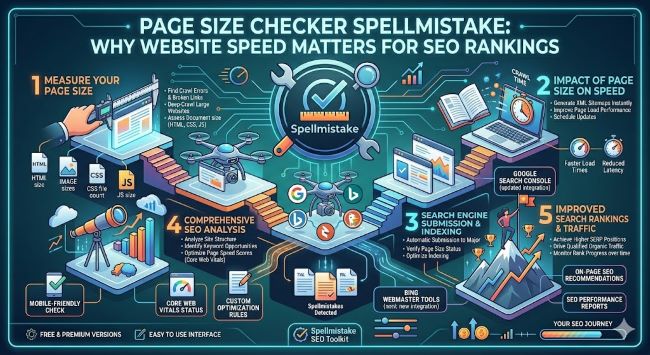
The phrase “page size checker spellmistake” represents a search query combining two essential website optimization concerns: checking page size for performance and detecting spelling mistakes for content quality. Page size checker spellmistake often appears as a typed search variation when users seek tools addressing both technical performance and content accuracy. Understanding page size checker spellmistake helps explain why this hybrid keyword exists and how it serves users needing comprehensive website audits. This guide clarifies page size checker spellmistake, explains why users search for this combination, and covers how tools addressing both concerns improve websites holistically.
Understanding Page Size Checker Spellmistake: The Keyword Explained
The term page size checker spellmistake requires context to understand properly.
Page size checker spellmistake often begins as a typing error when users search for page size checker tools but accidentally include misspellings or additional words. This search behavior reveals genuine user intent even through spelling mistakes.
The phrase also references actual tools designed to combine page size checking with spell-mistake detection. Services like SpellMistake (spellmistake.org, spellmistake.info) provide unified platforms checking both technical and content issues.
Users searching page size checker spellmistake typically want comprehensive website analysis addressing speed optimization and content accuracy simultaneously rather than using separate tools.
Search engine understanding means Google and other engines recognize page size checker spellmistake as a legitimate search query despite unconventional phrasing, directing users to relevant results.
The keyword represents convergence of two historically separate concerns: performance optimization (page size) and content quality (spell checking), suggesting user demand for integrated solutions.
Why Users Search for Page Size Checker Spellmistake
Understanding search motivations clarifies the keyword’s value.
Multiple optimization concerns drive users to seek page size checker spellmistake — they recognize that website success requires both fast loading and professional content without spelling errors.
Tool discovery is complicated when users don’t know exact terms, leading to page size checker spellmistake searches combining multiple goals into one query. Searching broadly helps users find relevant solutions.
Website audits require checking multiple factors simultaneously. Page size checker spellmistake searches reflect users wanting comprehensive assessment rather than visiting separate tools.
Beginner confusion among new webmasters leads to page size checker spellmistake searches as they learn that page speed and content quality both matter for rankings and user experience.
Time efficiency motivates users seeking page size checker spellmistake tools that handle multiple checks in one place rather than juggling separate checkers and spell-check software.
SEO awareness has increased user understanding that page size checker spellmistake concerns (speed and content quality) directly impact search rankings and user satisfaction.
What Page Size Checker Spellmistake Tools Actually Do
Legitimate tools address both components of the keyword.
Page size analysis in page size checker spellmistake tools measures total webpage weight including HTML, CSS, JavaScript, images, fonts, and multimedia. Size breakdown identifies which elements contribute most to overall page weight.
Spell and grammar checking features in page size checker spellmistake detect spelling errors, grammatical mistakes, and textual inconsistencies across page content. Content quality assessment reveals professionalism issues.
Unified reporting from page size checker spellmistake tools provides comprehensive audits showing both technical performance metrics and content quality issues in single reports.
Actionable recommendations in page size checker spellmistake results prioritize improvements by impact, helping users address highest-priority issues first.
No software installation required for page size checker spellmistake tools — most operate as free online services accepting URLs for instant analysis.
Breakdown by resource type shows which components inflate page size in page size checker spellmistake analysis, from images to scripts to stylesheets.
How Page Size Checker Spellmistake Tools Work
Using these tools effectively requires understanding the process.
Enter your website URL into page size checker spellmistake tools — most require just the domain without setup or login credentials.
Automated analysis runs when you submit a URL to page size checker spellmistake, scanning the page within seconds to measure size and detect content issues.
Results generation shows page size checker spellmistake findings including total page weight, size breakdown by component type, spelling/grammar errors, and improvement recommendations.
Detailed metrics in page size checker spellmistake reports include loading time estimates, performance scores, file-by-file size lists, and content quality issues flagged.
Export capabilities let you save page size checker spellmistake results for records, client delivery, or tracking improvements over time.
Bulk testing options in advanced page size checker spellmistake tools allow analyzing multiple URLs simultaneously, useful for comprehensive site audits.
Page Size Checker Spellmistake vs Separate Tools
Comparing unified vs fragmented approaches shows advantages.
Separate tools require using one tool for page size checker analysis and another for spell-check, creating workflow inefficiency and requiring manual result consolidation.
Page size checker spellmistake unified tools provide comprehensive analysis in single interface, reducing context-switching and simplifying result interpretation.
Reporting efficiency improves with page size checker spellmistake combined tools creating cohesive reports rather than multiple separate outputs.
Cost considerations favor page size checker spellmistake unified solutions since one tool subscription replaces two, reducing expenses.
Learning curve is gentler with page size checker spellmistake tools since users master one interface rather than learning multiple tool ecosystems.
Data consistency is easier with page size checker spellmistake tools since all metrics come from single source, reducing discrepancies between separate analyzers.
Implementing Page Size Checker Spellmistake Results
Acting on findings requires strategic approach.
Prioritize high-impact fixes from page size checker spellmistake results, addressing largest contributors to page size first while fixing obvious content errors immediately.
Image optimization is typically the highest-impact page size checker spellmistake recommendation, often comprising 50-80% of page weight and offering substantial improvement potential.
Spell-check corrections should be applied systematically across pages identified in page size checker spellmistake content quality analysis.
Caching implementation reduces page size checker spellmistake metrics by serving cached versions to repeat visitors, improving performance significantly.
Compression enabling compresses text resources, typically reducing transmitted file size by 60-80% in page size checker spellmistake analysis.
Script and stylesheet minification removes unnecessary characters from code without affecting functionality, reducing page size checker spellmistake measurements noticeably.
Lazy loading implementation defers non-critical resource loading in page size checker spellmistake optimization, improving perceived performance.
Common Misconceptions About Page Size Checker Spellmistake
Correcting misunderstandings improves tool use.
Page size checker spellmistake is not a technical error — it’s a legitimate search phrase representing combined optimization needs, not a website problem itself.
Spellmistake tools aren’t just spell-checkers — they’re comprehensive analyzers combining performance metrics with content quality assessment, serving broader optimization purposes.
Page size checker spellmistake findings aren’t always fixable immediately — prioritization helps, as some recommendations require technical expertise or significant refactoring.
One page size checker spellmistake analysis isn’t sufficient — regular monitoring shows improvement trends and identifies new issues as content evolves.
Page size reduction alone doesn’t guarantee rankings — page size checker spellmistake optimization is one of many factors affecting SEO, requiring holistic strategy.
Content perfection from page size checker spellmistake tools isn’t guaranteed — automation misses context-dependent errors requiring human review.
Page Size Checker Spellmistake and SEO Impact
Understanding search implications clarifies importance.
Page speed is an SEO ranking factor that page size checker spellmistake optimization directly influences through reducing page weight and improving load times.
Content quality signals including freedom from spelling errors factor into Google’s assessment of page expertise and trustworthiness that page size checker spellmistake analysis addresses.
User experience metrics like bounce rate improve when pages load faster and display professional, error-free content that page size checker spellmistake optimization achieves.
Mobile performance particularly benefits from page size checker spellmistake optimization since mobile users have slower connections making file size more critical.
Core Web Vitals scores improve when page size checker spellmistake recommendations are implemented, directly affecting search rankings through Google’s algorithm.
User engagement increases with fast-loading, professionally presented pages resulting from page size checker spellmistake optimization efforts.
Monitoring Page Size Checker Spellmistake Improvements
Tracking results ensures optimization effectiveness.
Establish baselines with initial page size checker spellmistake analysis before making improvements, creating reference point for measuring progress.
Schedule regular checks to run page size checker spellmistake analysis quarterly or bi-annually, monitoring whether optimizations persist and new issues emerge.
Set improvement targets for page size checker spellmistake metrics, establishing realistic goals for page size reduction and spelling error elimination.
Track metric trends over time to verify page size checker spellmistake optimizations produce lasting improvements rather than temporary gains.
Document changes made based on page size checker spellmistake recommendations, creating audit trail of optimization efforts.
Compare against competitors using page size checker spellmistake tools on competitor sites, benchmarking your performance against industry standards.
Combining Page Size Checker Spellmistake with Other Tools
Comprehensive strategy incorporates complementary analysis.
Google PageSpeed Insights complements page size checker spellmistake analysis by providing additional performance recommendations and Core Web Vitals data.
Accessibility checkers work alongside page size checker spellmistake tools to ensure sites serve diverse users including those with disabilities.
SEO audit tools build on page size checker spellmistake findings, adding keyword analysis, backlink assessment, and structural optimization recommendations.
Analytics platforms show user behavior changes resulting from page size checker spellmistake optimizations, validating improvements through traffic and engagement metrics.
A/B testing tools measure whether page size checker spellmistake improvements actually convert better, confirming improvement value.
Key Takeaways
- Page size checker spellmistake is a legitimate search query combining page size checking for performance with spell-mistake detection for content quality, serving users seeking comprehensive website audits.
- The keyword often appears as typing variations when users search for tools addressing multiple optimization concerns simultaneously rather than using separate specialized tools.
- Unified page size checker spellmistake tools provide comprehensive analysis in single interface, reducing workflow complexity compared to juggling separate page performance and spell-check software.
- Page size typically comprises 50-80% images, making image optimization the highest-impact recommendation from page size checker spellmistake analysis for file size reduction.
- Page size checker spellmistake results should prioritize recommendations by impact, addressing largest performance contributors and most obvious content errors first rather than all issues simultaneously.
- Regular monitoring of page size checker spellmistake metrics shows whether optimizations persist over time and identifies new issues emerging as websites evolve and gain new content.
- Page size checker spellmistake optimization directly impacts SEO through improved Core Web Vitals, faster loading times, and professional content quality that search engines reward with higher rankings.
- Implementing page size checker spellmistake recommendations requires technical knowledge for some fixes like caching and compression, though spell corrections can be applied immediately.
- Page size checker spellmistake tools are most effective when combined with Google PageSpeed Insights, accessibility checkers, and analytics platforms providing holistic optimization perspective.
- Mobile optimization benefits disproportionately from page size checker spellmistake efforts since mobile users have slower connections making file size reduction more critical for their experience.
- Page size checker spellmistake is not a website error itself but rather a search query revealing user demand for integrated tools addressing both technical performance and content accuracy.
- Establishing baselines before optimization and tracking improvements over time validates page size checker spellmistake efforts, demonstrating ROI through measurable performance gains.