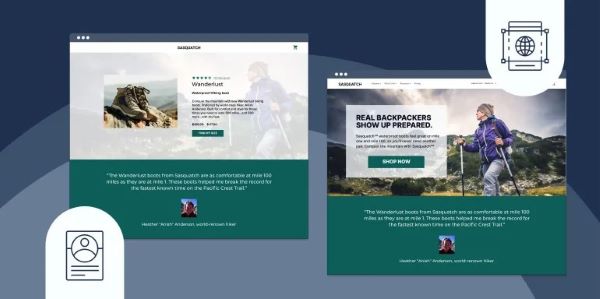
Most web pages try to do too many things at once. A homepage has a nav menu, multiple calls to action, blog links, footer links, product sections — it pulls the visitor in six directions. An AFG landing page works the opposite way. One page, one goal, one action you want the visitor to take.
If you have been running paid ads, email campaigns, or social promotions and not seeing the conversions you expect, the page people land on is usually the problem. This guide breaks down what an AFG landing page is, what makes it work, and how to build one that holds attention and drives results.
What Is an AFG Landing Page?
An AFG landing page is a standalone web page built around a single marketing objective — collecting leads, promoting a product, driving signups, or pushing visitors toward one specific action. Unlike a homepage, it strips out navigation menus, sidebar links, and anything else that could pull a visitor away before they convert.
The core idea is simple: when someone clicks an ad or a search result, they arrive expecting the page to match whatever brought them there. If the ad promised a free trial and the landing page talks about the company’s founding story, the visitor leaves. This alignment between the ad message and the page content is called message match, and it is one of the biggest factors in whether a landing page converts.
An AFG landing page is not just a pretty design. It is a structured page built around user behavior, clear messaging, and one focused CTA.
Why a Dedicated Landing Page Outperforms a Regular Webpage
Sending paid traffic to your homepage is one of the more expensive mistakes in digital marketing. The average landing page conversion rate across all industries sits around 6.6%, but pages built with focused structure and tight messaging consistently push past that. Pages that load in under one second convert at nearly three times the rate of pages that take five seconds.
A dedicated AFG landing page outperforms a regular webpage for a few concrete reasons:
- No distractions. Removing navigation links keeps visitors on one path. Every extra link on a page is an exit ramp.
- Message match. The headline and copy connect directly to whatever brought the visitor there — the ad, the email, the search result.
- One CTA. Giving visitors one action to take is more effective than giving them five. Multiple CTAs split attention and reduce conversions.
- Faster testing. A standalone page is easy to A/B test. You change the headline, run traffic, and see which version wins. You cannot do that cleanly with a homepage.
The Core Elements of an AFG Landing Page
A Headline That States the Value Immediately
Your headline is the first thing a visitor reads. It has about three seconds to convince them to keep reading. A strong headline on an AFG landing page is specific, not clever. “Get Your Free Project Estimate in 60 Seconds” works better than “Welcome to Our Platform.”
The headline should speak to one pain point or one clear benefit. Vague headlines lose people fast.
Subheadline That Adds Context
The subheadline sits directly below the main headline and gives one more layer of detail. It answers the “so what?” question. If the headline grabs attention, the subheadline earns the next ten seconds of the visitor’s time.
A Single, Clear CTA
Every AFG landing page needs one call to action. Not three. Not two versions of the same button placed in different colors. One.
The CTA should be above the fold — meaning visible without scrolling — and repeated once lower on the page for visitors who scroll through before deciding. The button text matters. “Start Free Trial” converts better than “Submit.” “Get My Quote” converts better than “Continue.”
Trust Signals
People do not convert on pages they do not trust. Trust signals on a landing page include customer testimonials, star ratings, company logos of clients you have worked with, certifications, or a simple stat like “4,000 customers in 30 countries.” Testimonials appear on 36% of top-performing landing pages for a reason — social proof shortens the decision process.
A Short, Focused Form
If your AFG landing page uses a form for lead generation, keep it short. Research consistently shows that form length has the highest impact on conversion rate. Three to five fields is the practical ceiling for most lead generation goals. Every extra field you add cuts the number of people who complete it.
Ask for only what you need. If you do not need a phone number to qualify the lead, do not ask for it.
Images or Video That Support the Offer
Visuals should show the product, outcome, or person behind the service — not generic stock photos of people shaking hands in offices. A short explainer video on a landing page can increase conversions significantly, but it needs to load fast and not autoplay with sound.
Page Speed Is Not Optional
A one-second delay in load time reduces conversions by 7%. That is not a rounding error — it is a measurable revenue hit. For any AFG landing page connected to paid campaigns, load speed is a direct cost factor. You are paying for every click. Slow pages waste that spend.
Three fast fixes that make a real difference:
- Compress images. Most landing pages carry images that are two to three times larger than they need to be. Tools like TinyPNG cut file size by 20-40% with no visible quality loss.
- Use a CDN. A content delivery network (Cloudflare’s free tier works for most small operations) serves your page from servers closest to the visitor. It cuts load time by 30-50% for global traffic.
- Enable browser caching. Returning visitors load your page from their local cache instead of fetching it fresh. This speeds up repeat visits by a similar margin.
If your page loads in under three seconds, you are in a safe range. Under two is better. Under one second is where the real gains start.
Mobile Optimization Is Non-Negotiable
Mobile devices account for over 62% of global website traffic. If your AFG landing page is not fully optimized for phones, you are cutting out the majority of your audience before they even read the headline.
Mobile optimization goes beyond making the page responsive. It means:
- Buttons large enough to tap without zooming
- Forms that work on a mobile keyboard without frustrating the user
- Text readable without pinching
- No horizontal scrolling
- Fast load times on a mobile connection, not just broadband
Test your landing page on an actual phone before running traffic to it. What looks clean on a desktop monitor often breaks on a 6-inch screen.
A/B Testing: How to Know What Works
Most landing page decisions are guesses until you test them. A/B testing means running two versions of the same page simultaneously — usually identical except for one element — and measuring which version converts more visitors.
Start with the elements that have the highest impact:
- Headline. Small wording changes produce measurable differences in conversion rate.
- CTA button text. First-person language (“Get My Free Quote”) consistently outperforms second-person (“Get Your Free Quote”) in most tests.
- Form length. Reducing from five fields to three often produces a significant lift.
- Hero image. A real photo of a person or product versus a generic graphic can shift results in either direction.
Run each test long enough to collect statistically significant data before calling a winner. Switching things up after 50 visitors is too early to read anything meaningful.
Common Mistakes to Avoid
Using the homepage as a landing page. The navigation menu alone gives visitors too many exit options. A dedicated AFG landing page removes that friction.
Mismatched messaging. If the ad says “50% off this week only” and the landing page does not mention the offer, visitors assume the deal expired or the page is wrong. Match the ad copy to the page headline.
Too many CTAs. Asking visitors to sign up, buy now, follow on social, and watch a video on the same page splits their attention. Pick one.
No social proof. A page with no testimonials, reviews, or trust signals asks visitors to take a leap of faith. Most do not.
Ignoring page speed. Paying for ad traffic that arrives at a slow page is money spent on people who bounce before they read anything.
Key Takeaways
An AFG landing page is a standalone web page focused on one marketing goal — and that focus is exactly what makes it work where a regular webpage does not.
- An AFG landing page removes navigation and distractions to keep visitors on a single conversion path.
- Message match — aligning your ad or email copy with your landing page headline — is one of the strongest conversion factors you control.
- The headline and CTA do most of the heavy lifting. Spend the most time on those two elements.
- Keep forms short. Three to five fields is the practical limit before drop-off increases.
- Trust signals like testimonials and client logos reduce hesitation and shorten the decision process.
- Page speed directly affects conversion rate. A one-second load time improvement can produce a measurable revenue lift.
- Mobile optimization is not a nice-to-have. Over 62% of traffic is mobile, and a broken mobile experience kills conversions.
- A/B test headlines, CTA text, and form length first — these three variables produce the most consistent conversion gains.
- Companies running 40 or more dedicated landing pages see up to 500% more conversions than those relying on one or two pages.
- Build one page per campaign or audience segment. Generic pages underperform because they try to speak to everyone at once.