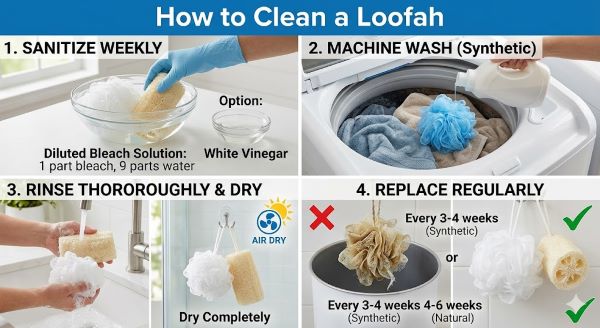
Learning how to clean a loofah properly ensures your exfoliating sponge remains hygienic, effective, and lasts longer before replacement. Loofahs accumulate dead skin cells, soap residue, and moisture that create ideal conditions for bacteria and mold growth, making how to clean a loofah an essential hygiene practice often overlooked. Understanding how to clean a loofah involves several complementary approaches ranging from quick rinses to thorough disinfection, each serving different purposes and fitting different schedules. This guide covers everything about how to clean a loofah, from daily maintenance to deep cleaning and knowing when replacement becomes necessary.
Why Cleaning a Loofah Matters
Before learning how to clean a loofah, understanding why this task is important motivates consistent maintenance.
Bacteria and mold accumulation is the primary reason how to clean a loofah matters. Loofahs are porous, constantly moist environments that harbor pathogens thriving in warmth and humidity. A loofah that is never cleaned becomes a bacterial and fungal colony, spreading microorganisms rather than exfoliating.
Dead skin cells accumulate inside loofah fibers after each use, providing organic material that bacteria feed on. This buildup is why how to clean a loofah regularly is essential — the accumulation accelerates bacterial growth exponentially.
Soap residue traps moisture and creates anaerobic pockets where bacteria thrive without oxygen. Understanding how to clean a loofah includes removing these residual soaps that paradoxically promote bacterial growth despite their antimicrobial properties.
Skin infections and irritation result from using a loofah that is never cleaned. Small cuts and abrasions during exfoliation allow loofah bacteria direct access to bloodstream, making how to clean a loofah a health priority beyond basic hygiene.
Unpleasant odors indicate bacterial overgrowth and decay, a sign that how to clean a loofah has been neglected. Odor-producing bacteria signal that the loofah poses health risks.
Daily Rinse: The Foundation of How to Clean a Loofah
The quickest way to begin how to clean a loofah is establishing a daily rinse habit immediately after use.
Rinse thoroughly under running water after each shower, squeezing the loofah repeatedly to force water through its fibers. This simple step removes most soap residue and dead skin cells, the foundation of how to clean a loofah maintenance.
Squeeze out excess water by wringing the loofah firmly, removing standing moisture that promotes bacterial growth. This is the critical step in daily how to clean a loofah practice.
Hang to air dry in a well-ventilated area, ideally near a window or fan. Loofahs that stay damp continuously become breeding grounds, so proper drying is essential to how to clean a loofah success.
Avoid storing in the shower if possible, since bathroom humidity prevents complete drying. If shower storage is unavoidable, hang the loofah where air circulation is best.
Daily rinses reduce the frequency needed for deep cleaning, making how to clean a loofah more manageable long-term.
Weekly Deep Clean: Thorough How to Clean a Loofah
Weekly deep cleaning complements daily rinses and prevents bacterial accumulation when learning how to clean a loofah properly.
Soak in hot water with dish soap by filling a bowl or sink with hot water and adding a squirt of dish soap, then submerging the loofah for 10–15 minutes. This soaking begins the process of how to clean a loofah by loosening embedded dead skin and soap residue.
Scrub the loofah against itself to dislodge accumulated material. Rubbing the loofah briskly under running water or between your hands during the soak is an effective how to clean a loofah technique.
Rinse thoroughly several times under running water until no soap bubbles remain. Incomplete rinsing during how to clean a loofah defeats the purpose by leaving residual soap.
Squeeze out water completely and hang to air dry in a sunny, well-ventilated location. UV exposure during the drying phase of how to clean a loofah kills remaining bacteria naturally.
Weekly frequency is ideal for most people learning how to clean a loofah, though those with sensitive skin or frequent loofah use may benefit from twice-weekly deep cleaning.
Disinfection Methods: Advanced How to Clean a Loofah
For thorough disinfection when learning how to clean a loofah, several methods kill bacteria and mold more effectively than soap alone.
Boiling method involves placing the loofah in a pot of boiling water for 10 minutes, a how to clean a loofah technique that kills most pathogens through heat. This is one of the most reliable ways how to clean a loofah comprehensively.
Bleach soak uses a solution of one part household bleach to nine parts water, submerging the loofah for 5–10 minutes. This aggressive how to clean a loofah method kills virtually all bacteria and mold but can degrade loofah fibers if done too frequently, so limit to monthly or when odors develop.
Vinegar soak uses equal parts white vinegar and water, soaking the loofah for 30 minutes to an hour. This gentler how to clean a loofah method kills many pathogens without the harshness of bleach, making it suitable for frequent use.
Hydrogen peroxide soak uses 3% hydrogen peroxide, soaking the loofah for 10–15 minutes. This how to clean a loofah method effectively disinfects while being gentler on fibers than bleach.
Microwave method involves placing the damp loofah in a microwave-safe container with water and microwaving on high for 2–3 minutes. Moisture and heat combine to kill bacteria in this how to clean a loofah technique, though care must be taken not to ignite synthetic loofahs.
Washing machine can be incorporated into how to clean a loofah monthly by running the loofah through a hot water cycle with detergent, though this may shorten loofah lifespan.
Drying Techniques: Critical to How to Clean a Loofah Success
Proper drying is as important as cleaning when learning how to clean a loofah effectively.
Air drying in sunlight is the ideal how to clean a loofah drying method. UV rays kill remaining bacteria naturally, and complete air circulation prevents moisture retention. Hanging the loofah outside on sunny days when possible completes how to clean a loofah maintenance perfectly.
Well-ventilated bathroom placement near a window or exhaust fan is second-best if outdoor drying is impossible. Ensure air circulates completely around the loofah when learning how to clean a loofah drying.
Avoid enclosed containers or drawers where moisture accumulates. A critical mistake in how to clean a loofah is storing a damp loofah, which negates all cleaning effort.
Towel-dry gently before hanging to remove excess water that slows how to clean a loofah drying time. Wring the loofah thoroughly but avoid aggressive wringing that damages fibers.
Complete drying before next use is essential. If the loofah is still damp when used again, how to clean a loofah efforts are compromised by moisture reactivating bacteria.
Natural vs. Synthetic Loofahs: Adjusting How to Clean a Loofah Methods
Different loofah materials require adjusted approaches to how to clean a loofah.
Natural loofahs (from loofah gourds) are more porous and harbor bacteria more readily, making how to clean a loofah more frequent and aggressive. Natural loofahs benefit from the boiling or bleach soak methods when how to clean a loofah disinfection is needed.
Synthetic loofahs are less porous but still require regular how to clean a loofah maintenance. Synthetic materials tolerate bleach better than natural fibers, though frequent bleaching still degrades them over time.
Microfiber loofahs require gentler how to clean a loofah methods since aggressive scrubbing or harsh chemicals damage delicate fibers. Vinegar soaks and gentle hand-washing are appropriate for how to clean a loofah with microfiber materials.
Sea sponges used similarly to loofahs require how to clean a loofah maintenance at least weekly, with saltwater rinsing complementing freshwater soaking as part of how to clean a loofah routines.
Storage Tips After Learning How to Clean a Loofah
Proper storage preserves your cleaning efforts and extends loofah lifespan.
Hang loofahs vertically using a hook or suction cup, allowing complete air circulation around all surfaces. This positioning is essential for how to clean a loofah effectiveness since moisture retention undoes all cleaning.
Create distance between loofah and bathroom walls or shower enclosure. Loofahs touching wet surfaces during how to clean a loofah maintenance cannot dry completely.
Multiple loofahs in rotation allow thorough drying between uses. Having two or three loofahs and rotating them is an advanced how to clean a loofah strategy that extends lifespan significantly.
Outdoor storage in a dry location is ideal if bathrooms lack adequate ventilation. Learning how to clean a loofah includes optimizing storage conditions for long-term maintenance.
When to Replace: Knowing When How to Clean a Loofah Isn’t Enough
Even with perfect how to clean a loofah practices, replacement becomes necessary eventually.
Visible mold or discoloration that doesn’t disappear after thorough how to clean a loofah is a sign replacement is needed. Discoloration indicates deep mold penetration that cleaning cannot fully address.
Persistent odors after aggressive how to clean a loofah attempts indicate bacterial colonies too entrenched for cleaning to help. When learning how to clean a loofah, recognize that some loofahs reach end-of-life regardless of effort.
Deteriorating fibers from age or aggressive cleaning mean the loofah is losing exfoliating effectiveness. Learning how to clean a loofah doesn’t prevent natural material degradation over time.
Every 3–6 months is typical replacement frequency for most people, though proper how to clean a loofah maintenance can extend this slightly. Natural loofahs often need replacement more frequently than synthetics.
Skin irritation or reactions from loofah use suggest replacement even if how to clean a loofah procedures seem adequate. Irritation may indicate bacterial contamination despite cleaning efforts.
Key Takeaways
- Loofahs accumulate dead skin cells, soap residue, and moisture creating ideal conditions for bacteria and mold, making regular how to clean a loofah essential.
- Daily rinsing under running water with wringing and air drying is the foundation of how to clean a loofah maintenance.
- Weekly deep cleaning using hot soapy water soaks and thorough rinsing prevents bacterial accumulation between replacements.
- Boiling, bleach soaking, vinegar soaking, and hydrogen peroxide are effective disinfection methods for how to clean a loofah when needed.
- Microwaving damp loofahs or washing them in the machine provides alternative how to clean a loofah disinfection methods suitable for different situations.
- Air drying in sunlight is the ideal drying method when learning how to clean a loofah since UV rays kill bacteria naturally.
- Never store damp loofahs in enclosed containers; hang vertically in well-ventilated areas for complete drying as part of how to clean a loofah maintenance.
- Natural loofahs require more frequent how to clean a loofah maintenance and aggressive disinfection than synthetic alternatives.
- Microfiber and sea sponge loofahs require gentler how to clean a loofah methods since delicate materials cannot tolerate harsh chemicals.
- Rotating multiple loofahs allows thorough drying between uses, extending lifespan and improving effectiveness of how to clean a loofah practices.
- Persistent odors, visible mold, or deteriorating fibers signal that how to clean a loofah is no longer effective and replacement is necessary.
- Most loofahs need replacement every 3–6 months despite proper how to clean a loofah maintenance due to natural material degradation.