When you search “batting cages near me,” you’re looking for a place to improve your swing, practice your timing, or just have fun hitting baseballs. Batting cages have become popular training facilities for serious ballplayers and casual hitters alike. Understanding what different facilities offer and how to find quality locations near you helps you make the most of your practice time.
What Are Batting Cages?
Batting cages are enclosed spaces where pitching machines deliver baseballs at various speeds and angles to batters. The setup protects surrounding areas while allowing hitters to focus entirely on their swing without chasing balls across a field.
Modern batting cage facilities range from simple outdoor structures with a few machines to massive indoor complexes with dozens of cages, video analysis technology, and instruction services. The basic concept remains consistent: a machine throws, you hit, and the balls get collected and recycled back into the machine.
The typical cage measures 40 to 50 feet deep, with netting on the sides and back to contain errant hits. The machine sits at regulation pitching distance, roughly 60 feet 6 inches for baseball, allowing batters to face realistic pitch timing and distance.
Facilities vary in quality, cleanliness, equipment, and additional services. Some locations focus purely on the hitting experience, while others add coaching, video analysis, strength training, and league play opportunities.
Types of Batting Cage Facilities
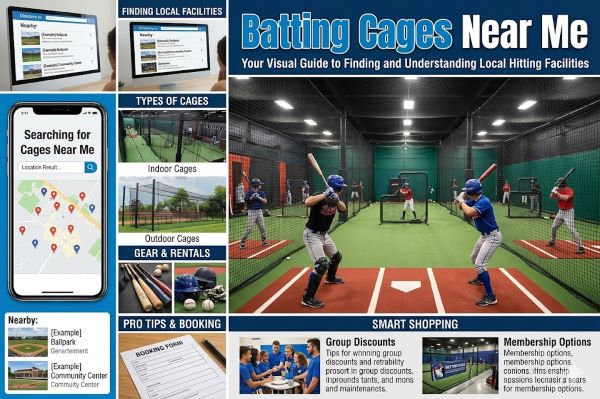
Not all batting cages operate the same way. Understanding different facility types helps you choose what matches your needs.
Traditional Outdoor Cages: Single or multiple cages with basic machines in outdoor settings. These tend to be cheaper per session and work well for casual hitters. Limited weather protection and basic equipment are typical.
Indoor Complexes: Climate-controlled facilities with multiple cages, better maintenance, and additional amenities. These cost more but provide consistent conditions and often include video analysis or coaching options.
Training Centers: Facilities combining batting cages with instruction, video swing analysis, strength coaching, and often instruction from experienced instructors. These are premium options best suited for serious players working on specific swing mechanics.
Multi-Sport Facilities: Indoor sports complexes that include batting cages alongside other facilities like tennis courts, basketball courts, or soccer fields. These often appeal to families seeking variety.
League Play Venues: Some facilities host organized leagues and tournaments in addition to open cage time. These support competitive players seeking game-like practice or official competition.
The facility type you choose depends on your goals, budget, and how frequently you plan to visit.
Finding Quality Batting Cages Near You
Google Maps is your best starting point. Search “batting cages near me” and results will show facilities within your area with ratings, hours, and contact information. Reading recent reviews gives insight into maintenance quality, machine conditions, and customer service.
Check facility websites or social media pages for current pricing, available cage types, and any special programs. Many facilities offer packages or memberships that reduce per-session costs if you visit regularly.
Call ahead before visiting for the first time. Ask about:
- Current machine speeds available
- Whether they provide or require your own bat
- Pricing structure and any membership discounts
- Cleanliness and maintenance standards
- Whether instruction or video analysis is available
- Peak hours and best times to visit
These questions help you understand what to expect and whether the facility matches your skill level and needs.
What to Expect on Your First Visit
Arriving at a new batting cage facility can feel overwhelming. Knowing what to prepare makes the experience smoother.
Bring appropriate gear: Wear athletic shoes and clothing that allows full range of motion. Many facilities allow you to bring your own bat, though renting is usually available. Batting gloves help with grip and blister prevention, especially if you’re hitting multiple rounds.
Start with slower speeds: Even experienced hitters should warm up with slower pitches before moving to higher speeds. Machine speeds typically range from 40 mph to 90+ mph depending on facility capabilities and your skill level.
Get instruction if offered: Many facilities include basic instruction in their pricing or offer it as an add-on. A quick tip on stance or timing from an experienced instructor can dramatically improve your session results.
Expect soreness if you’re new: If you haven’t swung a bat recently, expect sore muscles the next day. Start with shorter sessions and work up to longer practice times as your body adapts.
Understand machine variation: Not all machines throw identical pitches. Some deliver fastballs only, while others offer curveballs, sliders, or changeups. Knowing what your facility offers helps you plan your practice focus.
Benefits of Regular Batting Cage Practice
Batting cages offer specific advantages that complement field play and game experience.
Swing Consistency: Repetitive swings in controlled conditions help build muscle memory and consistency. The ability to hit the same pitch multiple times develops confidence and reliability.
No Chasing: Unlike field practice, you don’t spend half your time chasing foul balls. More swings mean more practice in less time.
Speed Progression: You can gradually increase pitch speeds as comfort and skill improve. This builds confidence against faster pitching incrementally.
Timing Development: Facing consistent pitch speeds helps hitters recognize timing patterns. This transfers directly to better performance against live pitchers.
Off-Season Training: During months when leagues aren’t playing, batting cages provide organized practice opportunities. This maintains conditioning and muscle memory year-round.
Low-Pressure Environment: Without the stress of game play or performance evaluation, batters can focus purely on mechanics and improvement.
Cost Considerations
Batting cage pricing varies based on facility type and location. Budget accordingly before your visit.
Most facilities charge per token, bucket, or time block. A typical session costs between 5 and 20 dollars depending on the number of pitches or time allowed. Premium facilities with coaching or video analysis charge higher rates, sometimes 30 to 50 dollars per session or more.
Membership or package deals reduce per-visit costs significantly. If you plan to practice regularly, asking about monthly memberships or punch cards pays off. Some facilities offer family packages or group rates.
Children often receive reduced pricing at some facilities, making batting cage time an affordable family activity.
Safety Considerations
Batting cages are generally safe when basic precautions are followed.
Wear a helmet: Always wear a batting helmet. Even in enclosed cages, errant swings or rebounds can create injury risk.
Keep the area clear: Don’t stand in the cage if someone else is batting. Machines throw quickly, and reaction time is limited.
Inspect equipment: Check that your bat has no cracks or damage before use. Damaged bats can shatter or fail unexpectedly.
Follow facility rules: Each location has specific safety protocols. Follow them without exception.
Know the machine: Ask facility staff to explain how to start, stop, and adjust the machine before you begin.
Making the Most of Your Visit
Structure your practice time to maximize improvement.
Warm up with slower speeds before progressing to faster pitches. Focus on specific mechanical goals rather than just trying to hit hard. Work on recognizing pitch types if the facility offers varied pitches.
Take video if possible or ask facility staff for feedback on your swing. The visual reference helps you understand what adjustments are needed.
Practice for 20 to 45 minutes if you’re new to batting cages. Longer sessions lead to fatigue and poor form, reducing practice quality.
Key Takeaways
Batting cages near me searches lead to facilities ranging from basic outdoor structures to premium training complexes with video analysis and coaching. Google Maps and facility websites provide current locations, pricing, and service details in your area. Batting cage facilities vary significantly in quality, maintenance, machine speeds, and additional services like instruction or video swing analysis. Traditional outdoor cages offer budget-friendly options for casual hitters, while indoor complexes and training centers provide better conditions and services for serious players. Visit during off-peak hours for shorter waits and more personalized attention from facility staff. Bring your own bat and batting gloves or plan to rent them at the facility. Start with slower pitch speeds even if you’re experienced, and wear a batting helmet at all times for safety. Regular batting cage practice builds swing consistency, improves timing against faster pitching, and provides organized training during off-seasons when league play isn’t available. Membership or package deals significantly reduce per-visit costs compared to pay-per-session pricing if you plan to practice regularly. First-time visitors should expect soreness from unfamiliar swinging patterns and should plan shorter initial sessions before progressing to longer practice times.