Your WiFi password feels weak. Maybe you shared it with too many people. Perhaps you want to secure your network better. Whatever the reason, changing your how to change PLDT WiFi password using phone is easier than you think. You don’t need a computer. Your phone handles everything perfectly well.
Most people assume they need a laptop to access router settings. This misconception stops them from updating passwords when they want. The truth is that your phone is powerful enough to manage your WiFi network completely. Learning how to change PLDT WiFi password using phone takes minutes and gives you full control over your network security.
Understanding Your PLDT Router
Before changing anything, understanding your router basics helps. PLDT routers have an admin interface accessible through your phone’s web browser. This interface controls everything about your WiFi network.
Your PLDT router has a default IP address you’ll use to access settings. The most common address is 192.168.1.1. Some users type this as 192 l.168.1.1 or https //192 l.168.1.1 with spacing variations. The address remains the same regardless of spacing.
The router stores your network name (SSID) and password. Accessing the router’s admin panel lets you change these settings from your phone. This admin panel is the gateway to how to change wifi password for your PLDT network.
Prerequisites Before Starting
Having the right information before you begin prevents frustration. You need your current PLDT login credentials to access the router settings.
Most PLDT routers use default login information. The default username is typically “admin” and the default password is also “admin”. If you changed these from defaults, you’ll need those updated credentials.
Your phone needs WiFi connection to the PLDT network you’re trying to change. Mobile data won’t work for this task since you’re accessing the router directly. Ensure your phone is connected to the network before proceeding.
Have a secure new password in mind. This password should be strong but memorable. Use combinations of uppercase, lowercase, numbers, and symbols for maximum security.
Step-by-Step Guide to Access Router Settings
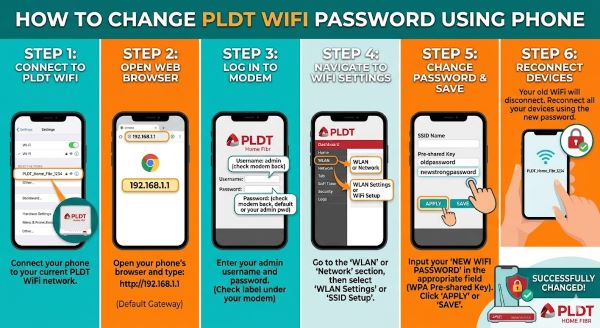
Accessing your router settings through your phone is the first critical step. This process is straightforward once you know the address.
Open your phone’s web browser. This could be Chrome, Safari, Firefox, or any browser installed on your device. The specific browser doesn’t matter as long as it works.
In the address bar, type 192.168.1.1 exactly. Don’t add “http://” or other prefixes unless the browser requires it. Some browsers automatically format the address correctly.
Press Enter. Your phone should navigate to the PLDT router login page. This page displays login fields for username and password.
Type your PLDT login credentials. Enter “admin” for both username and password unless you previously changed them. Click the login button.
You’re now in your router’s admin panel. This interface shows your network settings and allows configuration changes.
Finding the WiFi Password Settings
Once logged in, locate the WiFi settings. Router interfaces vary slightly, but the layout remains similar across PLDT models.
Look for a menu option labeled “WiFi Settings,” “Wireless Settings,” or “Network Settings.” This section contains your network configuration options.
Find the section showing your SSID (network name) and password. This section might be labeled “WiFi Name and Password” or “Network Information.”
You’ll see your current password displayed. Some routers show it in plain text. Others hide it behind asterisks for security.
This is where how to change wifi password begins. You’re about to replace your current password with a new one.
Changing Your WiFi Password from Your Phone
Now comes the actual password change. This process involves just a few clicks from your phone.
Locate the password field in your WiFi settings section. Click on the field containing your current password. Select all the text and delete it.
Type your new password carefully. Take time entering it correctly since typos create frustration later. Remember that passwords are case-sensitive.
After typing the new password, look for a confirmation field. Most routers require typing the password twice to ensure accuracy. Type your new password again in this confirmation field.
Review your entries to ensure they match. Mismatched passwords prevent saving your changes.
Click the “Apply” or “Save” button. Your router processes the change and updates your WiFi network.
What Happens After You Change the Password
After changing your password, several things occur automatically. Understanding this process prevents confusion.
Your PLDT router disconnects all connected devices. This happens because those devices recognize the old password. They can’t reconnect with the new password automatically.
Your phone disconnects from the WiFi network. You’ve successfully changed the password, but now you need to reconnect using the new password.
Go to your phone’s WiFi settings. Select your PLDT network from the available networks list. Enter your new password when prompted. Your phone reconnects successfully.
Other devices in your home also disconnect. Each device needs the new password to reconnect. Phone, tablets, laptops, and smart devices all require updating with the new password.
Reconnecting Other Devices to Your Network
After changing your password, reconnecting devices is straightforward. Each device follows similar steps.
On each device, go to WiFi settings. Find your PLDT network name. Select it and enter your new password when prompted.
Smart TV, streaming devices, and smart home gadgets also need the new password. Access these devices’ settings and update their WiFi credentials.
Computer connections work the same way. Open network settings and enter the new password.
Take time going through each device. This process might take several minutes depending on how many devices you use. But it’s worth the effort for improved security.
Troubleshooting Common Issues
Sometimes things don’t go smoothly. Knowing how to handle problems prevents frustration.
If you can’t access the router at 192.168.1.1, your phone might not be connected properly. Disconnect and reconnect to your PLDT WiFi. Try again.
If login fails with “admin/admin”, your router credentials were changed. Try other combinations you remember. If nothing works, you may need to reset the router to factory defaults.
If your password won’t save, ensure you filled all required fields. Check that your password meets any specified requirements. Some routers require passwords longer than 8 characters.
If devices can’t reconnect after the change, ensure they’re receiving the new password correctly. Typos are common. Verify the exact password you entered.
Using 192.168.l.1 vs 192.168.1.1
You might see 192.168.l.1 or 192 l.168.1.1 written with different characters. These are the same address with spacing or character variations.
The correct IP address is 192.168.1.1. The middle character is the number one (1), not the letter “L” (l). This distinction matters for typing accuracy.
Some guides use spacing like 192 l.168.1.1 for readability. Don’t type spaces when entering the address. Type it continuously as 192.168.1.1.
https //192 l.168.1.1 with spacing is another variation you might see. Again, type it without spaces and without “https://” as 192.168.1.1 in your browser address bar.
Security Considerations When Changing Passwords
Changing your password serves security purposes. Making smart choices protects your network.
Your new password should be strong. Avoid simple words or patterns. Combine uppercase letters, lowercase letters, numbers, and symbols.
Don’t use passwords containing personal information. Birthdays, names, and addresses are too easy to guess.
Avoid reusing passwords across different services. Your WiFi password should be unique.
Change your password periodically. Security experts recommend changing passwords every few months.
Document your new password somewhere secure. This prevents frustration if you forget it. Consider using a password manager.
Advanced Options in Your Router Settings
Beyond basic password changes, your router settings offer additional options.
Hide SSID is an option that conceals your network name. This adds minimal security but prevents casual discovery.
Channel Selection affects network performance. Different channels reduce interference from neighboring networks. This is more about performance than security but still matters.
Security Type should be set to WPA2 or WPA3. These are current encryption standards. WEP is outdated and insecure. Ensure your router uses modern security.
These advanced settings are optional for most users. Basic password changes handle security for typical households.
When to Reset Your Router
Sometimes more than a password change is needed. Router resets address serious issues.
If you forgot your credentials and can’t access the router, reset is necessary. This returns all settings to factory defaults, erasing your custom password.
To reset, find the small reset button on your router. Hold it down for 10-15 seconds. The router restarts and returns to default settings.
After reset, PLDT login returns to “admin/admin”. You’ll need to reconfigure all settings including WiFi password.
Reset should be a last resort when other troubleshooting fails. It erases all customizations, not just the password.
Key Takeaways
- How to change PLDT WiFi password using phone involves accessing your router through a browser using the IP address 192.168.1.1.
- You need your PLDT login credentials (typically admin/admin) to access router settings.
- Your phone must be connected to your PLDT WiFi network to access the router settings.
- The router IP address 192.168.1.1 can be typed different ways like 192.168.l.1 or 192 l.168.1.1 but the address remains the same.
- How to change wifi password involves finding WiFi settings in your router admin panel and updating the password field.
- After changing your password, all devices disconnect and need the new password to reconnect.
- Your new password should be strong, using uppercase, lowercase, numbers, and symbols for security.
- Ensure you have the correct IP address as 192.168.1.1, not 192.168.l.1 with the letter “L”.
- https //192 l.168.1.1 with spacing and formatting variations should be typed as 192.168.1.1 without formatting.
- Reconnecting devices is straightforward once your password is changed. Go to WiFi settings on each device and enter the new password.
- Router resets return all settings to defaults. This is a last resort for serious problems like forgotten login credentials.
- PLDT routers typically use default admin credentials unless previously changed by the user.
- Changing your WiFi password regularly improves security and prevents unauthorized access.
- Take time configuring each device carefully to avoid typos that prevent reconnection.
- Your router admin panel offers additional security options beyond password changes for advanced users.