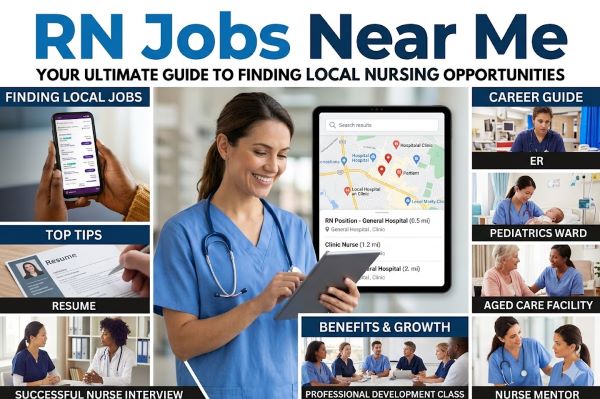
When you search “RN jobs near me,” you’re looking for registered nurse positions that offer professional advancement, better compensation, and expanded clinical responsibility compared to entry-level healthcare roles. Registered nursing positions are in high demand across the country, with multiple work environments and specialization options. Understanding where to find RN jobs, what different positions entail, and how compensation varies helps you target positions matching your experience and goals.
What Does a Registered Nurse Do?
A Registered Nurse provides direct patient care, medication administration, patient assessment, and coordination of care across multiple healthcare settings. The role requires independent clinical judgment and responsibility for patient outcomes.
RNs assess patient conditions by gathering health histories, performing physical examinations, and analyzing lab results and vital signs. This assessment informs care planning and identifies changes in patient status requiring intervention.
Medication administration is a core RN responsibility. RNs verify patient identity, medication orders, dosages, and potential drug interactions before administration. They educate patients about medications and monitor for side effects or adverse reactions.
Beyond direct care, RNs coordinate with physicians, specialists, therapists, and support staff to ensure comprehensive patient care. RNs serve as patient advocates, communicating concerns and preferences to the healthcare team.
Patient education about disease management, medication compliance, lifestyle changes, and preventive care falls under RN responsibilities. This education supports better outcomes and patient empowerment.
The role demands critical thinking, quick decision-making under pressure, and the ability to manage multiple patients simultaneously. RNs work both independently and as part of larger care teams depending on setting.
Types of RN Positions and Work Settings
RN opportunities exist across diverse healthcare environments, each offering different patient populations, work pace, and specialization focus.
Hospital Medicine Units: Medical-surgical floors care for patients with acute illnesses, post-surgical recovery, and chronic disease management. These positions involve managing multiple patients, coordinating with various specialists, and adapting to rapidly changing conditions.
Intensive Care Units: ICU positions require managing critically ill patients with complex physiological conditions. Higher acuity, more intensive monitoring, and smaller patient loads characterize these roles. ICU experience is valued across healthcare settings.
Emergency Departments: ER nursing involves fast-paced environments with unpredictable patient presentations. Triage decisions, emergency interventions, and high-stress situations define this specialty. ER experience develops strong clinical decision-making skills.
Operating Rooms: Perioperative RNs support surgical teams in operating environments. Roles include scrub nurses assisting with procedures and circulating nurses managing surgical workflow and patient safety.
Outpatient Clinics: Office-based nursing involves patient education, vital signs monitoring, and procedure assistance in less acute settings. These positions often offer stable schedules and predictable environments.
Home Health Nursing: RNs visit patients in home settings, providing wound care, medication management, and patient monitoring. This role offers autonomy and flexibility but requires strong assessment skills and independent decision-making.
Rehabilitation Centers: Post-acute care facilities care for patients recovering from surgery or acute illness. These positions focus on functional improvement and discharge planning.
Mental Health Facilities: Psychiatric RNs work with patients experiencing mental health crises, mood disorders, and substance abuse. These roles require strong communication and de-escalation skills.
School Nursing: RNs in school settings manage student health issues, medication administration, and health education. These positions typically offer standard school hours and schedules.
Case Management: RN case managers coordinate patient care across healthcare systems, manage insurance authorization, and plan transitions between care settings. These positions often offer office-based work and less physical demand.
Each setting offers different scheduling, patient interactions, and clinical focuses. Your preference for environment and patient population influences where to concentrate your job search.
Finding RN Jobs in Your Area
Multiple specialized resources help you locate registered nurse positions near you.
Healthcare Job Boards: Indeed, LinkedIn, and nursing-specific sites like NursingJobs.com, American Nurse Today, and HealtheCareers list RN positions with detailed filtering options. Setting job alerts notifies you immediately when matching positions post.
Hospital and Healthcare System Websites: Major medical centers and hospital systems post openings directly on their career pages. Applying through official sites sometimes prioritizes applications over third-party submissions.
Professional Organizations: The American Nurses Association and specialty nursing organizations maintain job boards and networking connections. Membership often includes job search benefits and career resources.
Staffing and Travel Nursing Agencies: Healthcare staffing companies specialize in RN placement, offering temporary assignments, contract positions, and permanent placements. Travel nursing agencies place RNs in temporary positions across the country.
Nurse Recruiters: Many hospitals employ dedicated nurse recruiters who actively recruit experienced RNs. Connecting with recruiters at healthcare facilities you’re interested in provides early access to openings.
Networking: Connecting with nurse colleagues, attending professional conferences, and participating in nursing organizations often reveals opportunities before public posting. Many positions fill through referrals.
State Nursing Associations: Your state board of nursing and state nursing associations maintain resource lists and sometimes job boards.
When searching, use location filters, specialty preferences, and shift preferences to narrow results efficiently. Setting multiple alerts across different platforms maximizes your visibility.
Education and Licensure Requirements
Becoming a registered nurse requires significant education and successful licensure.
RN licensure requires completion of either a bachelor’s degree in nursing (BSN) or an associate degree in nursing (ADN) from an accredited program. BSN programs typically take four years, while ADN programs take two to three years. Many RNs start with ADN and later pursue BSN degrees while working.
After completing nursing school, you must pass the NCLEX-RN examination, a comprehensive test assessing nursing knowledge and clinical decision-making. Passing rates typically range from 85 to 90 percent on first attempt for well-prepared candidates.
Most states require RN licensure renewal every 1 to 3 years, often accompanied by continuing education requirements. Specialty certifications in areas like critical care, emergency nursing, or oncology enhance credentials and earning potential.
Some RNs pursue advanced degrees including master’s degrees or doctoral degrees in nursing, enabling roles like nurse practitioner, nurse manager, or nursing educator.
Salary and Compensation Expectations
RN compensation varies significantly based on location, experience, specialty, education level, and employer type.
Entry-level RNs typically earn between 50,000 and 65,000 dollars annually, with hourly rates from 25 to 35 dollars depending on region and employer. Large medical centers and urban areas pay substantially more than rural facilities.
Shift differentials add 2 to 5 dollars per hour for evening and night shifts. Weekend and holiday differentials provide additional premium pay. Many facilities require night shift work early in employment.
Experience increases earnings substantially. RNs with 5 to 10 years experience often earn 65,000 to 85,000 dollars annually. Specialized positions in ICU, OR, or emergency departments command higher salaries.
Advanced practice positions like nurse practitioner, nurse anesthetist, or clinical nurse specialist earn 100,000 to 180,000 dollars or more annually depending on specialty and location.
Full-time RN positions typically include comprehensive benefits including health insurance, retirement plans, life insurance, and paid time off. Many employers offer tuition reimbursement for advanced education.
Overtime opportunities provide additional income, particularly in understaffed facilities. However, mandatory overtime should be factored into realistic expectations.
Required Skills and Professional Competencies
Beyond education, successful RNs develop specific skills and competencies.
Clinical assessment skills enable accurate patient evaluation and early identification of complications. Strong assessment prevents adverse events and improves outcomes.
Communication skills matter tremendously. RNs interact with patients, families, physicians, and interdisciplinary teams daily. Clear, empathetic communication builds trust and coordinates care effectively.
Critical thinking and clinical judgment allow RNs to synthesize complex information and make sound decisions rapidly. This skill develops through experience and continuous learning.
Time management and organizational skills enable juggling multiple patient needs and competing demands. Efficiency prevents burnout and improves patient satisfaction.
Emotional intelligence and resilience help RNs process stressful situations, patient suffering, and moral dilemmas inherent in healthcare work. These qualities support long-term career sustainability.
Technical competency with electronic health records, medical equipment, and clinical technology increases in importance as healthcare becomes more technology-dependent.
Specialization and Career Growth
RN positions provide pathways to numerous specializations and career advancement opportunities.
Pursuing specialty certification in areas like critical care nursing, emergency nursing, oncology nursing, or pediatric nursing increases credential value and earning potential. These certifications require experience and passing examinations.
Advancing to management positions like charge nurse, nurse manager, or director roles increases responsibility and compensation while shifting focus from direct patient care to leadership and administration.
Pursuing advanced practice roles including nurse practitioner, clinical nurse specialist, nurse anesthetist, or nurse midwife requires master’s or doctoral degrees. These roles offer autonomy, higher compensation, and expanded clinical responsibility.
Education roles like clinical instructor, nursing faculty, or education specialist suit RNs who enjoy teaching and curriculum development.
Research and evidence-based practice positions combine nursing expertise with scientific inquiry, contributing to healthcare advancement.
Key Takeaways
RN jobs near me searches lead to Registered Nurse positions across hospitals, clinics, home health, rehabilitation, mental health facilities, and specialty settings. Healthcare job boards like Indeed, nursing-specific sites, and hospital career pages provide primary sources for finding local openings. Registered nurses assess patients, administer medications, coordinate care with healthcare teams, and provide patient education across multiple healthcare settings. Entry-level RN compensation typically ranges from 50,000 to 65,000 dollars annually, with experience increasing earnings to 65,000 to 85,000 dollars. Shift and weekend differentials add 2 to 5 dollars per hour to base pay. Becoming an RN requires completion of bachelor’s or associate degree nursing programs and passing the NCLEX-RN examination. Hospital medicine units and intensive care positions offer high acuity patient care and accelerated skill development, while clinic and home health roles provide more predictable environments. Emergency department and operating room positions demand strong decision-making and thrive in high-stress settings. Clinical assessment, communication, critical thinking, and emotional resilience determine RN success. Urban medical centers and large hospital systems pay substantially more than rural facilities. RN positions provide pathways to specialization, management, advanced practice, education, and research roles with significant earning potential growth. Travel nursing agencies offer temporary assignments and flexible opportunities for geographic mobility.