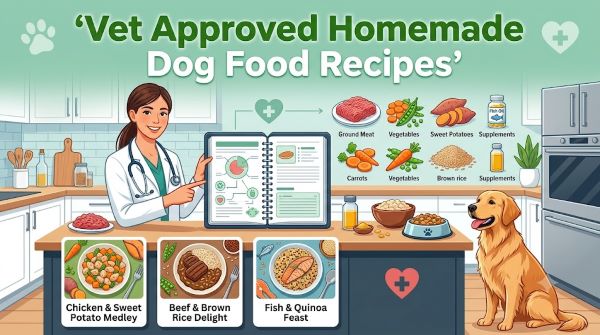
Your dog deserves quality nutrition. Commercial dog food has ingredients you don’t recognize. You wonder whether making vet approved homemade dog food recipes is better for your pet.
Homemade dog food allows you to control exactly what your dog eats. But creating nutritionally balanced meals requires understanding what dogs need. Vet approved homemade dog food recipes ensure your dog gets proper nutrition without missing essential nutrients.
Let’s talk about creating healthy dog food at home, understanding nutritional requirements, and providing proven recipes your vet will approve.
Understanding Dog Nutritional Needs
Dogs require specific nutrients to thrive. Creating homemade dog food recipes without understanding these needs can harm your dog.
Essential nutrients dogs need:
Protein: Builds and repairs muscles. Dogs require 18-25% protein depending on age and activity.
Fat: Provides energy and supports skin and coat health. Dogs need 5-15% fat.
Carbohydrates: Provides energy and fiber. Not essential but beneficial.
Vitamins: Enable bodily functions. Must be present in appropriate amounts.
Minerals: Support bones, teeth, and bodily functions. Balance matters greatly.
Fiber: Supports digestive health.
Creating homemade dog food recipe without these nutrients in proper balance creates deficiencies. Your dog might develop serious health problems over time.
This is why vet approved homemade dog food recipes matter. Veterinarians ensure balanced nutrition.
Why Consider Homemade Dog Food
Many people choose homemade dog food for valid reasons.
Reasons to make homemade dog food recipes:
Control ingredients. You know exactly what goes in.
Avoid additives and preservatives.
Use whole food ingredients.
Tailor meals to your dog’s preferences.
Potentially save money compared to premium commercial foods.
Address allergies or sensitivities.
Provide fresher meals than commercial options.
These reasons make homemade dog food appealing. But it requires commitment and knowledge.
Working with Your Veterinarian
Before starting how to make dog food at home, consult your veterinarian.
Your vet can:
Review homemade dog food recipes for nutritional balance.
Adjust recipes for your dog’s specific health needs.
Recommend appropriate vitamin and mineral supplements.
Monitor your dog’s health on the new diet.
Suggest recipes or resources meeting veterinary standards.
Vet approved homemade dog food recipes aren’t just recipes your vet approves. They’re formulated to meet your dog’s specific health requirements.
Your vet is your partner in creating healthy dog food at home.
Basic Dog Food Recipe Components
How to make homemade dog food starts with understanding basic components.
Every dog food recipe should include:
Protein source (40-50% of meal):
- Chicken breast
- Ground beef
- Turkey
- Fish
- Eggs
Carbohydrate source (30-40% of meal):
- Brown rice
- Sweet potato
- Oatmeal
- Barley
Vegetable source (10-15% of meal):
- Carrots
- Green beans
- Broccoli
- Peas
- Spinach
Healthy fat source (small amounts):
- Fish oil
- Olive oil
- Coconut oil
Supplements:
- Calcium
- Multivitamins
- Omega-3 supplements
Balancing these components creates nutritionally complete meals.
Basic Chicken and Rice Recipe
This simple homemade dog food recipe provides a starting point.
Ingredients:
- 2 pounds boneless, skinless chicken breast
- 2 cups cooked brown rice
- 1 cup cooked carrots (chopped)
- 1 cup cooked green beans
- 1 tablespoon fish oil
- Calcium supplement (follow vet dosage)
Instructions:
- Boil chicken until fully cooked (165 degrees internal temperature)
- Shred or dice cooked chicken
- Cook brown rice according to package directions
- Cook carrots and green beans until soft
- Combine all ingredients
- Add fish oil and calcium supplement
- Cool before serving
Serving size depends on your dog’s weight. A 50-pound dog typically needs 2-3 cups daily. Adjust portions based on your dog’s weight and activity level.
This dog food recipe provides balanced nutrition with proper vet guidance.
Turkey and Sweet Potato Recipe
This homemade dog food recipe offers variety and different nutrients.
Ingredients:
- 2 pounds ground turkey
- 2 cups cooked sweet potato (mashed)
- 1 cup cooked peas
- 1 cup cooked broccoli (chopped small)
- 1 tablespoon olive oil
- Multivitamin supplement (follow vet dosage)
Instructions:
- Brown ground turkey in a large pot
- Drain excess fat
- Cook sweet potato and mash
- Cook peas and broccoli
- Combine turkey with cooked vegetables
- Add olive oil and multivitamin
- Mix thoroughly
- Cool before serving
Sweet potatoes provide fiber and nutrients. Peas and broccoli add vitamins and minerals. This food for dogs recipe offers balanced nutrition with vet oversight.
Beef and Vegetable Recipe
This homemade dog food recipes variation uses beef as the protein source.
Ingredients:
- 2 pounds ground beef (lean)
- 2 cups cooked brown rice
- 1 cup cooked carrots (chopped)
- 1 cup cooked zucchini
- 1 tablespoon fish oil
- Calcium supplement
Instructions:
- Brown ground beef, drain fat
- Cook brown rice separately
- Cook vegetables until tender
- Combine beef with vegetables and rice
- Add fish oil and calcium
- Cool before serving
Lean ground beef provides quality protein. The combination of vegetables and rice creates balanced healthy dog food.
Fish and Sweet Potato Recipe
Fish provides omega-3 fatty acids supporting skin and coat health.
Ingredients:
- 2 pounds white fish (salmon or cod)
- 2 cups cooked sweet potato
- 1 cup cooked carrots
- 1 cup cooked spinach
- 1 tablespoon fish oil (extra omega-3)
- Multivitamin supplement
Instructions:
- Bake or boil fish until fully cooked
- Remove all bones carefully
- Cook sweet potato and mash
- Cook carrots and spinach
- Flake fish into small pieces
- Combine all ingredients
- Add fish oil and multivitamin
- Mix thoroughly and cool
Fish-based food for dogs provides complete nutrition with excellent protein and healthy fats.
Importance of Supplements
Homemade dog food recipes often require supplements to ensure balanced nutrition.
Common supplements:
Calcium: Dogs need adequate calcium for bone health. Most homemade dog food recipe requires added calcium.
Multivitamins: Ensures micronutrient coverage.
Fish oil: Provides omega-3 fatty acids.
Vitamin E: Antioxidant supporting overall health.
Taurine: Essential for heart health, especially in certain recipes.
Your veterinarian recommends specific supplements and dosages based on your dog’s needs and your how to make dog food recipe.
Never guess on supplement amounts. Incorrect supplementation causes health problems.
Feeding Guidelines
How to make homemade dog food includes understanding appropriate portions.
Daily food amounts by weight:
10-pound dog: 1-1.5 cups daily 25-pound dog: 1.5-2 cups daily 50-pound dog: 2-3 cups daily 75-pound dog: 3-4 cups daily 100-pound dog: 4-5 cups daily
Adjust based on activity level and individual metabolism. Active dogs need more calories. Sedentary dogs need less.
Divide daily portions into 1-2 meals. Many owners feed twice daily.
Monitor your dog’s weight. If gaining weight, reduce portions. If losing weight, increase portions.
Your vet helps determine proper portions for your specific dog.
Storage and Food Safety
Proper homemade dog food storage prevents spoilage and foodborne illness.
Storage guidelines:
Refrigerator: Store prepared food 3-4 days maximum.
Freezer: Freeze in portions. Lasts up to 3 months.
Freezer portions: Use ice cube trays or small containers for easy portioning.
Thawing: Thaw frozen portions in refrigerator before serving.
Never use spoiled food. When in doubt, throw it out.
Wash hands and surfaces when handling raw ingredients.
Proper storage ensures your dog’s safety and meal freshness.
Ingredients to Avoid
Some common foods are toxic or harmful to dogs.
Never feed dogs:
- Chocolate (toxic)
- Grapes and raisins (toxic)
- Onions and garlic (toxic)
- Avocado (toxic)
- Xylitol sweetener (toxic)
- Excessive salt
- Excessive fat
- Cooked bones (splintering risk)
Review all ingredients before creating vet approved homemade dog food recipes. When unsure about an ingredient, ask your vet.
Transitioning to Homemade Dog Food
Switching from commercial food to how to make homemade dog food requires gradual transition.
Transition schedule:
Week 1: 25% homemade, 75% commercial Week 2: 50% homemade, 50% commercial Week 3: 75% homemade, 25% commercial Week 4: 100% homemade
Gradual transition prevents digestive upset. Some dogs transition faster. Some need 6+ weeks. Your vet guides the transition for your dog.
Watch for digestive changes, energy levels, and coat quality during transition.
Monitoring Your Dog’s Health
Creating vet approved homemade dog food recipes requires ongoing monitoring.
Monitor:
- Weight stability
- Energy level and behavior
- Coat quality (shine and thickness)
- Digestion (stool quality)
- Overall health
Schedule vet checkups every 6-12 months. Your vet can assess whether healthy dog food is supporting your dog’s health.
Blood work helps ensure your dog gets proper nutrition. Deficiencies sometimes don’t show obvious symptoms.
Your vet is your partner in maintaining your dog’s health with homemade dog food.
Common Mistakes to Avoid
Understanding what not to do helps create better homemade dog food recipes.
Common mistakes:
Unbalanced nutrition: Missing essential nutrients.
Improper supplementation: Wrong amounts of vitamins and minerals.
Inconsistent recipes: Varying ingredients without vet approval.
Feeding inappropriate foods: Including toxic or harmful ingredients.
Ignoring your vet: Making up recipes without veterinary guidance.
Poor storage: Feeding spoiled food.
Assuming homemade is always better: Some commercial foods are excellent.
Avoiding these mistakes ensures your homemade dog food recipe supports your dog’s health.
Key Takeaways
- Vet approved homemade dog food recipes provide quality nutrition with careful planning and veterinary guidance.
- Homemade dog food requires understanding essential nutrients: protein, fat, carbohydrates, vitamins, and minerals.
- Homemade dog food recipes should include protein, carbohydrates, vegetables, and healthy fats in proper balance.
- Dog food recipes require supplements to ensure nutritional completeness without vet-approved guidance.
- Vet approved homemade dog food recipes must be reviewed by your veterinarian before feeding.
- How to make dog food starts with consulting your vet about your dog’s specific nutritional needs.
- Basic dog food recipe components include chicken or other protein, brown rice or sweet potato, vegetables, and supplements.
- Healthy dog food requires careful attention to portion sizes based on your dog’s weight and activity level.
- How to make homemade dog food safely involves understanding which ingredients to avoid (chocolate, grapes, onions, etc.).
- Transitioning to homemade dog food requires 3-4 weeks of gradual mixing with commercial food.
- Proper storage of homemade dog food prevents spoilage and foodborne illness.
- Food for dogs created at home requires ongoing monitoring of your dog’s health and weight.
- Fish and sweet potato recipes provide excellent nutrition with omega-3 fatty acids.
- Calcium supplementation is critical in most homemade dog food recipes.
- Regular vet checkups ensure your homemade dog food supports your dog’s health.
- If you’re considering vet approved homemade dog food recipes, consult your veterinarian, follow balanced recipes, add appropriate supplements, and monitor your dog’s health regularly for best results.